
partnerships

Content tagged with "partnerships"

Related Topics
Displaying 61 - 70 of 362

A "First of Its Kind" Broadband Co-op is Born
Five electric cooperatives in three states have joined forces to form a new broadband co-op with a mission to bring high-speed Internet service to the unserved rural parts of Virginia, Maryland and Delaware.

The formation of the Virginia, Maryland & Delaware Association of Broadband Cooperatives (VMDABC) was announced at the start of the new year, harkening back 76 years ago when those same three states formed the Virginia, Maryland & Delaware Association of Electric Cooperatives (VMDAEC) to bring electricity to the rural areas in those states.

“This association is the first of its kind in the nation,” said VMDABC Board Chairman Casey Logan, CEO of the Waverly, Va.-based Prince George Electric Cooperative, and its broadband subsidiary, RURALBAND.

“This is truly a historic day,” Logan said when the tri-state association was announced in January. “Much like the Virginia, Maryland & Delaware Association of Electric Cooperatives was created 76 years ago during the formative years of rural electrification, today’s formal organization of a broadband association will improve the quality of life for our members.”

The VMDABC will begin its work with five founding “Class A members,” each of which are in various stages of building Fiber-to-the-Home (FTTH) networks.

In addition to Prince George Electric Cooperative, the four other founding Class A members are the BARC Electric Cooperative, based in Millboro, Va., and its subsidiary, BARC Connects; the Arrington, Va.-based Central Virginia Electric Cooperative, and its subsidiary, Firefly Fiber Broadband; the Choptank Electric Cooperative in Denton, Md., and its subsidiary, Choptank Fiber LLC; and the Mecklenburg Electric Cooperative, based in Chase City, Va., and its subsidiary, EMPOWER Broadband. Collectively, they provide electric service to 135,000 members.

Envisioning a Path Forward

DV Fiber Issues Request for Proposals To Bring Fiber to 20 Towns in Southern Vermont

DVFiber, a Communications Union District in southern Vermont representing 20 towns looking to build a Fiber-to-the-Premises (FTTP) network to more than 10,000 unserved and underserved households in the region, has issued a Request for Proposals (RFP) in search of private sector groups interested in a public-private partnership agreement. 

The CUD envisions completing all connections by 2024 in two or three phases, with major progress made in the first year. The RFP provides detailed information on member towns for respondents, identifies possible funding identified by its Governing Board, and sets expectations for the resulting network. It sets a deadline for responses of March 26th, 2021.

“We are laser-focused on securing affordable, equitable high-speed Internet in our communities,” DVFiber Chair Ann Manwaring said in October of 2020. “The COVID pandemic has clarified this vital need, for education, for healthcare, for business. We are grateful for the support we have earned to date.”

Partnerships Bring Better Broadband to Le Sueur County, Minnesota - Episode 446 of the Community Broadband Bits Podcast

This week on the podcast we’re catching up with what’s been happening in Le Sueur County (pop. 28,000) in southern Minnesota, and path they’re on to turn the region from one of the least connected in the Land of Ten Thousand Lakes to one on track to becoming among the most connected in the next couple of years. To do so, Christopher talks with Barbara Droher Kline, a county consultant who helped the county organize the recent broadband efforts. 

She shares with Chris the history of their recent work to bring area towns together and the resulting partnerships with local Internet Service Providers (ISPs) to do both fiber and fixed wireless projects. Chris and Barbara end the conversation by briefly discussing the recent Rural Digital Opportunity Fund auction, and the adverse consequences it’s having in places like Le Sueur.

This show is 34 minutes long and can be played on this page or via Apple Podcasts or the tool of your choice using this feed

Transcript below. 

We want your feedback and suggestions for the show-please e-mail us or leave a comment below.

Listen to other episodes here or view all episodes in our index. See other podcasts from the Institute for Local Self-Reliance here.

Thanks to Arne Huseby for the music. The song is Warm Duck Shuffle and is licensed under a Creative Commons Attribution (3.0) license.


Le Sueur County, MN Hitting on All Cylinders

Over the last three years, Le Sueur County, Minnesota has assembled a task force of citizens, local officials, and business leaders which have succeeded in dramatically improving broadband for thousands of residents who previously had poor or no connectivity. In doing so, they’ve also forged relationships, inventoried local resources, and created a model which is likely to see the landscape go from one where nearly all residents in the county were under- or unserved by basic broadband at the beginning of 2018 to one where the vast majority of the community will have access at 100/20 Mbps in the next couple years. And if efforts continue to succeed, it’s possible we might see full fiber coverage in Le Sueur by the end of the decade, making it one of the most connected counties in the state.

Le Sueur is located ninety miles southwest of Saint Paul, and had just under 29,000 residents and 11,000 households in 2019. There are 11 whole or partial cities in the county, of which Le Center and Montgomery are the largest at around 2,500 people each. The remaining communities sit between 200 and a 1,000 residents. More than a thousand farms dot the landscape, and agriculture, along with some tourism and resort development centered on the lake communities, comprise the bulk of the county’s economic picture.

Image

Broadband infrastructure outside of the population centers in Le Sueur is generally poor, which was a problem for residents, for businesses, and for farmers looking to remain competitive and modernize operations: “the lack of this service means students have trouble completing schoolwork and seeking future opportunity, small businesses have trouble connecting with customers and vendors, farmers have less efficient operations, home sales and development lags, and options for telemedicine are closed.”

SiFi Networks Building Fiber Cities Coast-to-Coast

Privately-owned broadband infrastructure builder and operator SiFi Networks is sprouting roots in cities from California to the Commonwealth of Massachusetts.

The Fullerton FiberCity network was SiFi’s first FiberCity — a privately built, financed, and operated open access network. Network construction in Fullerton started in November 2019 and involved over 600 miles of micro-trenching underground fiber, a technique designed to minimize traffic and neighborhood disruption sometimes associated with ripping up roads to install fiber conduit. The first residential customers were hooked up in June, with an anticipated completion date in the fall of 2021.

And while construction of the fiber network in Fullerton isn’t quite finished yet, eight other communities across the country are in the process of becoming the next SiFi fiber cities.

Salem

In Salem, Ma., SiFi Networks announced at the end of November it had completed a “construction trial” which is a “practice run” ahead of the actual construction of the citywide network, slated to start this spring.

Once completed, the Salem project, in which SiFi Networks is partnering with GigabitNow, will offer the city’s 43,180 residents an alternative to the monopoly services of Comcast. GigabitNow, which will be the Internet Service Provider (ISP) for Salem FiberCity, estimates they will be able to begin providing services as early as summer 2021.

Read this Op Ed: Broadband would close NC’s digital divide; Big Telecom is blocking it

Paul Meyer, the Executive Director of the North Carolina League of Municipalities, has a new piece out outlining clearly and concisely what anyone living in or familiar with the state of broadband in North Carolina is thinking: the connectivity problems shown in such stark detail by the ongoing pandemic are nothing new, and the entities to blame are the huge out-of-state monopoly Internet Service Providers like Charter Spectrum and AT&T.

Both companies, and AT&T in particular, have spent hundreds of thousands of dollars over the last ten years to reduce competition across the state so that they can extract as much profit from North Carolina's communities as possible. Since the passage of HB 129 in 2011, no new municipal networks have been built in the state.

Meyer outlines the consequences of this reality, with residents and businesses alike stuck on old, slow, expensive connections that service providers have no incentive to upgrade in a broken marketplace.

Read the whole piece here, but see some excerpts below:

It has simply become unacceptable and unconscionable that a handful of companies stand in the way of allowing this to happen almost a decade after banding together to block municipalities from building and operating their own systems, and proclaiming as they did so that they would address the digital divide in the state.

Bar Harbor, Maine Considers Building Its Own Network After Charter Spectrum Raises Prices Tenfold

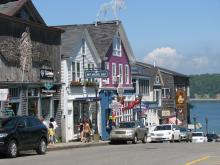
Bar Harbor, Maine (pop. 5,500) has been trying to get a municipal fiber network off (and into) the ground for more than half a decade. If local officials throw weight behind the most recent move, we may see momentum continue to build for faster, more reliable, affordable, and universally available Internet access for government use, commercial development, and maybe, down the road, residents as well. 

We last checked in with the town in 2016, when its franchise agreement with Charter had expired and negotiations for a new agreement had stalled. At the time, Bar Harbor was considering a $100,000 engineering study to flesh out the possibility of a municipal Fiber-to-the-Home (FTTH) network or a $50,000 study to do so for a government-only network, but at the last minute the town’s Warrant Committee and Council decided not to move ahead on either at the last minute. Since then, the situation has remained more or less in stasis.

But with recent changes, Charter has signaled that it will begin to charge Bar Harbor $45,000 a year for access via – a ten-fold increase over the $4,500/year the town currently pays. With the company refusing to negotiate, on December 15 the Town Council, at the recommendation of the Communication and Technologies Committee (CTC), voted unanimously to place a $750,000 proposal to build their own institutional network onto the 2022 budget draft review. The general public will have the chance to vote on the measure in June.

Image

Locally Owned Infrastructure at a Fraction of the Price 

Grant Program Helps Arkansas Communities Large and Small Get Started on Broadband

A host of cities and counties in Arkansas are about to get a major broadband boost thanks to local officials taking steps to act on a grant program deployed by the state last year. Borne out of the state’s 2020 1st Extraordinary Session at the end of March 2020 in response to the Covid 19 pandemic, the new Rural Broadband I.D. Expenses Trust Fund Grant Program will disburse $2 million in funds divided into 30 one-time grants of $75,000 each to towns, cities, and counties to tackle the digital divide in the Toothpick State. The program is financed via Arkansas’ Restricted Reserve Fund with money given to the state by the CARES Act, and is administered by the University of Arkansas for Medical Sciences (UAMS) Institute for Digital Health & Innovation. And while an array of projects have been awarded funds, money remains available and applications are being accepted on a rolling basis for those who have yet to take advantage.

A Win for Local Self-Reliance and Increasing Competition

The program is expressly designed to bridge the gap for communities that want to begin to improve local Internet access but are stymied by a necessary first step: paying for those economic, design, and feasibility analyses which require pulling together the wide range of options available in the context of local conditions. That’s where this program comes in, according to Rachel Ott, the UAMS Institute’s for Digital Health and Innovation Grant Director. Communities can use the work produced to apply for federal grants down the road, including the recently concluded Rural Digital Opportunity Fund (RDOF), the U.S. Department of Agriculture’s ReConnect Program, funds from the Agriculture Improvement Act of 2018, and any other forthcoming federal funding programs. 

Cuyahoga County, Ohio Issues RFI In Search of Better Broadband in Cleveland and Beyond

Cuyahoga County, Ohio’s Office of Innovation and Performance just issued a Request for Information (RFI) [pdf] which seeks to gather information from private vendors in the initial stages of a plan to improve connectivity for those on the wrong side of the broadband gap in Cleveland and the surrounding area. Responses are due January 15th.

Grace Chu, Cleveland Foundation Public Service Fellow with the Cuyahoga County Office of Innovation & Performance, spoke with us about the origins of the RFI and what the county hopes to get out of the request. The county released a new strategic plan in 2017, and broadband played a prominent role. In the time since, the county has partnered with local organizations (like DigitalC and PCs for People) in distributing devices and hotspots to get families connected. Their efforts have intensified during in 2020 and in the wake of the pandemic, but local officials seek a longer term, more comprehensive solution to the connectivity crisis. It sees projects coming to fruition over the next couple of years.

In the announcement, County Executive Armond Budish emphasized the scope of the digital divide and how the efforts they’ve taken during the ongoing Covid 19 pandemic:

Sadly, Cuyahoga County is one of the worst connected communities in the U.S., with 19 percent of households not having any type of internet service. While we’ve been working to lessen the digital divide through partnerships with the Cleveland Foundation and PCs for People—we provided broadband access to over 3,000 homes through this initiative—this RFI allows us to work toward a more long-term solution that can reach more people and provide easier access for those who need it.

The Truth is in the Numbers: How RS Fiber Brings Broadband to the Farms and Families of Rural Minnesota - Episode 440 of the Community Broadband Bits Podcast

We've written a lot about RS Fiber, a broadband cooperative operating in two rural counties in south-central Minnesota. This week on the podcast Christopher talks with two representatives from the cooperative which serves almost three thousand members in Renville and Sibley counties. Our first guest is Jake Reiki, a corn and soybean farmer and Board Chair for RS Fiber. We’re also joined by Jenny Palmer, City Administrator for Winthrop and Treasurer for the cooperative.

Christopher, Jake, and Jenny talk about the trials that shaped a network which fostered some division but which the community now takes for granted, its hybrid fiber and wireless approach to connectivity, what having fast, affordable broadband has done for families and business in the area, and where the network sits financially moving ahead as it continues to expand and see robust, steady growth. 

For more on the history of the network, read our 2016 case study Fertile Fields for New Rural Internet Cooperative, or listen to Episode 198 and Episode 99 of the podcast.

This show is 41 minutes long and can be played on this page or via Apple Podcasts or the tool of your choice using this feed

Transcript below. 

We want your feedback and suggestions for the show-please e-mail us or leave a comment below.

Listen to other episodes here or view all episodes in our index. See other podcasts from the Institute for Local Self-Reliance here.

Thanks to Arne Huseby for the music. The song is Warm Duck Shuffle and is licensed under a Creative Commons Attribution (3.0) license.