
News

On Tax Day, Advocates Spotlight How Local Tax Dollars Can Close the Digital Divide and Hold AI Data Centers Accountable

As Americans file their taxes this Tax Day, digital equity leaders across the nation will gather for a timely exploration of how public dollars are being used to strengthen communities – and how local advocates can negotiate better deals as AI data centers rapidly expand. Co-hosted by the Institute for Local Self-Reliance Community Broadband Networks Initiative and the National Digital Inclusion Alliance (NDIA), the next Building for Digital Equity livestream – “Local Dollars, Local Solutions: Digital Equity Tax Money & How to Negotiate Better AI Data Center Deals” – promises to offer insights from frontline forces working to ensure broadband and technology investments serve public needs rather than distant corporate interests.

ILSR and AAPB Webinar Shines Light on Connecting Multi-Family Housing

The webinar examined what it takes to connect communities floor by floor, building by building. The conversation ranged from why MDU's matter to the business and technical realities of providing Internet access to those who live in them, as well as the federal and state policies that help or hinder the push to give everyone the ability to meaningfully participate in a digital economy.

California Should Regulate Broadband ISPs Like Utilities, Report Says

Broadband ISPs should be held to a higher public interest standard and regulated like traditional utilities in California, a new joint study by nonprofit state policy news outlet Cal Matters and UC Berkeley’s Possibility Lab argues. State governments should also vocally support community broadband networks as a direct challenge to monopoly power, the authors state.

Fort Bragg Fiber Deployment Sees Delays, Higher Costs

Fledging efforts to build a fiber network in Fort Bragg, California have seen some headwinds in the wake of the project’s original build partner being dismissed. The need to find a new vendor to help the city toward its goal has resulted in significantly higher costs and some notable delays, though city leaders say they’re still dedicated to guiding the project to completion.

Thirty Years Later, the Telecom Act’s Legacy Remains Unfinished

When Congress passed the Telecommunications Act of 1996, it sought to modernize regulatory structures for the digital age. Three decades later, architects of the ‘96 Act say it achieved many of those goals, but numerous legal challenges reshaped how key provisions were implemented.

On State Scoop podcast: New Mexico's Timely Broadband Subsidy Program

ILSR's Christopher Mitchell talks to State Scoop about the far reaching significance of a new affordable Internet law passed in New Mexico and how state's can take the lead in the absence of federal action. Senate Bill 152 – first filed on January 26 of this year by State Sen. Michael Padilla, (D) Majority Whip – will update the state’s Rural Telecommunications Act and empower the New Mexico Public Regulation Commission (PRC) to offer up to $30/month for qualified households to pay for Internet service.

Chittenden County CUD Continues Affordable Fiber Expansion In Vermont

Chittenden County Communication Union District recently completed a planned fiber extension into the heavily rural communities of Essex Town, Essex Junction, Jericho, Shelburne, Westford, and Williston. The deployment was completed in partnership with Fidium Fiber, which says the expansion brought fiber optic connectivity to more than 1,900 homes and businesses across the six towns for the first time ever.

Illinois Bill Seeks Broadband Price Caps for Low-Income Customers

lllinois State Sen. Rachel Ventura, D-Joliet, has introduced legislation directing regulators to set broadband price protections for low-income residents, though the bill text leaves key details to be determined later. The measure joins those in other states, including Connecticut, Maryland, and Minnesota, that have introduced measures aimed at capping broadband prices for qualifying households.

With ACP Gone, New Mexico Creates First State-Level Internet Affordability Program

New Mexico Gov. Michelle Lujan Grisham signed into law today new legislation that aims to provide tens of thousands of low-income households in “The Land of Enchantment” an Internet lifeline similar to the now-expired federal Affordable Connectivity Program. It makes the state the first to step up in the absence of federal action to support households that just can’t afford to pay for monthly service, and will directly support 173,000 households, offering up to a $30/month for qualified households to pay for Internet service.

Bois Forte Band Begins Construction on $20 Million Tribal Fiber Project

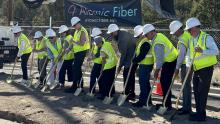
The Bois Forte Band of Chippewa (also referred to as Ojibwe) has officially begun construction on a foundational fiber optic broadband expansion project in northern Minnesota. The ambitious undertaking is supported by a significant $20 million grant awarded under the 2021 Tribal Broadband Connectivity Program, marking a major step forward in modernizing infrastructure for the sovereign nation.