
FTTH

Content tagged with "FTTH"

Fiber to the Home
Displaying 61 - 70 of 1307

UTOPIA Fiber Marks Another Banner Year

UTOPIA Fiber is celebrating another banner year.

Created in 2009 by a coalition of Utah cities to cultivate a competitive market for fast affordable fiber Internet, the nation’s largest community-owned open access network recently announced it officially hit the 70,000 subscriber mark.

UTOPIA (Utah Telecommunication Open Infrastructure Agency) is now delivering fiber-to-the-home (FTTH) access in 21 Utah cities, partnering with 19 private-sector ISPs, while offering business-class service in 50 cities.

Over the past year – having deployed 1.9 million feet of fiber-optic cable, 1.3 million feet of underground conduit, 68,190 feet of aerial strand, and 8,660 handholes – UTOPIA’s growth in 2024 means fiber access is now available to 23,684 new homes and an additional 1,974 businesses in Utah, UTOPIA officials said.

Image

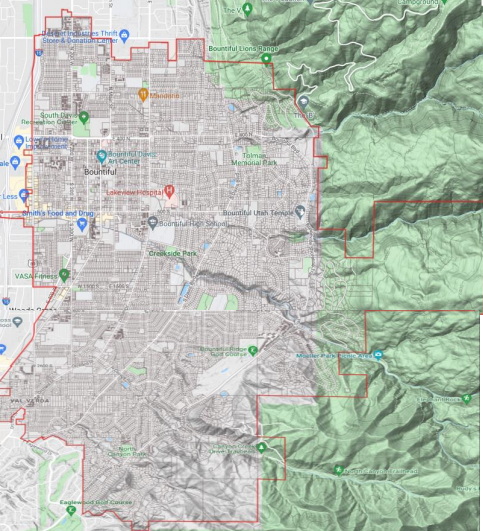
This comes after having completed its West Haven City buildout and the nearly complete construction of Bountiful Fiber’s network, which is on track to be finished by July. Additionally, UTOPIA has also completed fiber installations in 22 homeowner associations (HOAs) and are gearing up to connect more in the coming months.

UTOPIA Fiber executive director Roger Timmerman pointed to the surging demand for affordable fiber connectivity as to what’s fueling the growth:

“Residents are the driving force behind these fiber projects because they need better Internet now, not years down the road.”

For Timmerman, the truth is in the ledger. UTOPIA added 11,256 new subscribers in 2024, which pushed its subscriber total to over 70,000 – half of whom joined the network in the past three to four years.

Consolidated Cooperative and Delaware County, Ohio Unveil $4.9 Million Fiber Expansion

The Delaware County, Ohio Board of Commissioners and Consolidated Cooperative have announced the start of a $4.9 million joint initiative to dramatically expand affordable fiber optic broadband access to large swaths of the heavily underserved county.

According to county officials, the expansion will be funded via American Rescue Plan Act (ARPA) funds, and the deployment will target more rural communities largely in the northwestern and north-central portions of Delaware County.

“We are very pleased to see this project taking tangible form now,” Delaware County Board Of Commissioners President Barb Lewis said of the project.

“So many more families, especially in the rural parts of the county, will finally be able to connect to high-speed Internet from their homes and farms, rather than having to travel someplace else to access it.”

Consolidated Cooperative provides electricity service to 15,900 electric members via 18,000 meters across eight counties in north central Ohio. The cooperative, which won the county contract during a competitive sealed bid process last year, says it has begun network construction and plans to begin offering service to impacted areas as early as this spring.

Consolidated offers four tiers of broadband service: symmetrical 300 megabit per second (Mbps) fiber for $80 a month, symmetrical 500 Mbps fiber for $100 a month, symmetrical 1 gigabit per second (Gbps) fiber for $120 a month, and a specialized symmetrical 1 Gbps “Gamer Gig” service (featuring reduced latency and “prioritized” routing) for $140 a month.

Carson, California Breaks Ground On New Municipal Fiber Network

Leveraging years of regional fiber collaboration, Carson, California has broken ground on a municipal broadband pilot network city officials hope will someday be expanded to bring affordable fiber optic broadband to the entire city of 95,558, situated just 13 miles south of downtown Los Angeles.

Carson is looking to leverage $8 million in federal and state grant money to connect 1,000 unserved households and 372 businesses, with City Hall, the Civic Center and Cal State Dominguez Hills serving as anchor institutions for the new network. A new city announcement says construction has begun, with the pilot construction phase to be completed in 18 months.

“This visionary project is set to transform Carson into a cutting-edge digital hub, revolutionizing broadband access for residents, businesses, and city services,” the city said in a statement announcing the groundbreaking.  

The new network deployment comes as the Los Angeles area prepares to host the 2026 FIFA World Cup, and is being built on the back of previous collaborative fiber deployments amid the state of California’s landmark effort to boost statewide broadband competition.

Image
Street rail overpass in Carson with the city name spelled out on side of overpass by spraypaint

“This project represents a major milestone for Carson,” Carson Mayor Lula Davis-Holmes said of the new deployment. “By investing in our own fiber network, we are creating a foundation for enhanced connectivity, economic growth, and future smart city initiatives. This is just the beginning of a transformative journey for our community.”

‘Building Fiberhoods in Holland’ Mini Documentary Encore

If you missed our inaugural Community Broadband Film Fest series kick off last week, the entirety of the event can still be viewed on ILSR’s YouTube channel.

Co-hosted by ILSR’s Community Broadband Networks Initiative and the American Association for Public Broadband (AAPB), the March 27th livestream event premiered the eight minute mini documentary on how the city of Holland, Michigan came to build a municipal broadband utility to supercharge its local economy.

Following the live screening before an audience of over 100 virtual participants there was a lively discussion with several of the film’s key figures: Holland Board of Public Works Director of Utility Services Ted Siler, Superintendent of Broadband Services for Holland Board of Public Works Pete Hoffswell and Holland Mayor Nathan Bocks.

The Holland panel explored a number of themes raised in the film, including where the project stands now, the challenges involved in moving forward, and how the network is a natural extension of other vital infrastructure the city has built over the years.

Watch the event in its entirety below:

Remote video URL


Conexon Finishes 10th Fiber Build In Partnership With The Sac Osage Electric Cooperative

Conexon Connect, the ISP arm of fiber broadband builder Conexon, said it has completed its tenth fiber broadband deployment in four years in collaboration with the Sac Osage Electric Cooperative. The network, Conexon’s second deployment in Missouri, will bring affordable fiber broadband for the first time to the cooperative’s 9,000 mostly rural members.

The 2,100-mile fiber network, located 150 miles from Conexon's Kansas City headquarters, was finished in less than three years, and dramatically improves broadband availability across nine rural Missouri counties.

"The demonstration of what we can achieve together through hard work and partnership keeps us moving forward in our commitment to advancing connectivity across rural America," Conexon Co-CEO Randy Klindt said of the company’s latest deployment.

Image
A section in the southwest corner of Missouri is highlighted in orange to show where Cedar County is

Conexon was initially known for rural fiber-optic network design and construction, but launched its own last mile public facing retail ISP, Conexon Connect, in 2021.

It now directly provides last mile access via networks across Arizona, Colorado, Florida, Georgia, Illinois, Kentucky, Louisiana, Mississippi and Missouri, and has seen its business boom thanks to widespread nationwide partnerships with U.S. cooperatives and federal grants.

Willmar, Minnesota Moves Forward With $24.5 Million Open Access Fiber Network

The city of Willmar, Minnesota (est. pop. 21,000), has voted to move forward on plans for a city-owned open access fiber network. The $24.5 million investment, which saw finalized approval by the Willmar city council earlier this month with a 4-3 vote, aims to drive accountable, affordable, fiber access to long underserved parts of the city about 100 miles west of Minneapolis/St. Paul.

In its 4-3 vote in early March, the City Council opted to continue work on the Connect Wilmar Initiative, something it says is an answer to the ongoing failures by regional incumbent telecom monopolies to provide uniform, high quality, high speed, affordable Internet access.

“Local internet providers were not interested in improving Willmar's internet infrastructure,” the city says. “After soliciting proposals, the city chose to partner with Hometown Fiber, aligning with Willmar’s long-term vision to provide fast, reliable internet through an open-access fiber network.”

Image
Willmar MN map highlight in state map that shows it is in the southern central part of the state

The decision to move forward on the network comes after several years of careful planning, starting with the creation of a city broadband committee in September of 2022, and a mapping of local broadband access (or lack thereof) completed in December of 2022.

Jemez Pueblo Tribe Seeks ‘Light,’ Fiber Knowledge To Advance Digital Sovereignty

For Angela Diahkah, what started as a self-described “side hustle” is now her full-time job.

Diahkah – or “Ange,” as she sometimes goes by – is five years into serving as Network Operations Supervisor and Digital Navigator Program Manager for JNET, the Tribally-owned broadband provider for the Pueblo of Jemez.

Just 50 miles northwest of Albuquerque, Angela leads the charge in building a new fiber network, the gold-standard of Internet connectivity, that once complete will serve her community (one of the 19 Pueblos in New Mexico).

Last week, she was at the 17th Tribal Broadband Bootcamp (TBB) in Aguana, California in the hills above Temecula Valley, along with a half dozen JNET technicians-in-training and JNET Director Kevin Shendo. The 30 or so other TBB participants – representing broadband leaders from several other federally-recognized Tribes – were also there for the three-day immersive learning experience focused on building and operating Tribal Internet networks.

Held in different tribal regions several times a year since the initiative began in 2021, this most recent bootcamp was back at TBB co-founder Matthew Rantanen’s “RantanenTown Ranch.”

Image
Angela looks at her crew explore fiber splicing equipment on a table outdoors on RantenenTown Ranch in the desert-like foothills of Anguana, Califonia

“We're basically trying to find a light in a dark tunnel and just work with what’s best for us,” Angela told ILSR in describing why she and her JNET crew had come, just as they are in the early stages building out their own fiber-to-the-home network.

“We want to expose them to the network,” literally and figuratively, she said.

Google’s Hometown Of Mountain View, CA Eyes Potential Muni Fiber Build

Home to one of the wealthiest and most successful companies in America, you wouldn’t expect residents of Mountain View, California to find themselves on the wrong side of the digital divide.

Yet the city of nearly 82,000 – frustrated with spotty and expensive service by AT&T and Comcast – is considering a municipal broadband network to deal with the deficiencies of the duopoly.

Last year, Mountain View officials hired the consulting firm, Entrust Solutions, to take a closer look at the city’s broadband availability metrics and device potential options for the city.

The finished report and accompanying technical memorandum note that Comcast enjoys a monopoly over vast swaths of the city, resulting in expensive, slow, and spotty access.

“Although most of the City is considered ‘well-served’ by federal and California state standards, most residents have only a single option for Internet service and are essentially subject to a cable monopoly,” the authors wrote. “When it comes to modern gigabit Internet services, only 42% of the serviceable addresses have fiber access.”

The study similarly found that despite ongoing taxpayer subsidization, AT&T has historically failed to upgrade its older DSL customers to fiber across large swaths of the city.

“AT&T provides legacy copper-based service for most of the city, but that technology is not capable of meeting the State of California’s minimum broadband speeds of 100 Mbps download and 25 Mbps upload,” the consulting firm found.

“And while AT&T also provides fiber-to-the-premises (FTTX) services in limited neighborhoods of the City, this means that much of the City is effectively a Xfinity/Comcast monopoly, leading to an uncompetitive market for City residents seeking broadband service.”

ILSR and AAPB To Host Community Broadband Film Fest

Consider this your invitation to the first Community Broadband Film Fest.

Slated for March 27 from 4 to 4:45pm ET, the livestream event will feature the world premiere of “Building Fiberhoods in Holland” – a mini eight minute documentary on how the city of Holland, Michigan came to build a municipal broadband utility to supercharge its local economy.

The short film tells the story of how – after almost a decade of consideration, education, planning – Holland, Michigan embarked on a mission to build a city-owned fiber network offering fast, affordable, world-class Internet service.

Narrated by key leaders in the city of 33,000, viewers will learn how and why the city established its own municipal broadband utility to solve its local connectivity challenges.

Image
CBN Film Fest flyer

Hosted by ILSR’s Community Broadband Networks team and the American Association for Public Broadband (AAPB), the event will kick-off with virtual red carpet introductions of some of the film’s stars, including Holland Mayor Nathan Bocks.

After the screening, viewers will be able to engage the real life cast in a bit of Q&A.

Vermont Looks To Bring Oasis of Fiber-Connected Telehealth Hubs to ‘Healthcare Deserts’

Many rural healthcare facilities are struggling to keep their doors open. Some have been shuttered. Add to that the looming federal budget crisis threatening to end Medicare payments for telehealth and the urgency of what a coalition of Vermont healthcare leaders, librarians, and state broadband officials are doing comes into view. 

It’s called VITAL VT (Virtual Integration for Telehealth Access through Libraries in Vermont) – an exploratory effort being launched with a $10,000 grant from the Leahy Institute For Rural Partnerships, working in collaboration with the University of Vermont Medical Center and the Vermont Library Association.

The aim is to leverage the state’s unprecedented deployment of community-owned fiber networks and create a scalable, community-centered telehealth model. 

“We’re really looking to find any way to make any of our community members in Vermont get access to care – easier, better, quicker. So we’re wondering if telehealth (hubs) might be the right answer for that, if we’re able to put it right in people’s libraries, right in their own towns,” Roz King, chief of research for emergency medicine at the University of Vermont, told local CBS affiliate WCAX.

Data-mapping ‘Healthcare Deserts’

In speaking with ILSR this week, King said what spurred the initiative was a talk given by one of UVM’s medical students who noted how Vermont was beginning to see “healthcare deserts where in some rural counties PCP’s were aging out and no one was there to provide healthcare (services).”