
Reports

Unlocking the Value of Broadband for Electric Cooperative Consumer-Members
When privately owned utilities refused to electrify rural areas, communities established electric cooperatives to light up their homes and farms. A recently released report, Unlocking the Value of Broadband for Electric Cooperative Consumer-Members, describes how electric co-ops now have an opportunity revisit that role as they bring Internet access to their rural members nationwide.

The report, published in September by the National Rural Electric Cooperative Association (NRECA), finds that millions of people in electric cooperative service territories lack access to broadband. As the report explains, rural electric cooperatives are uniquely poised to meet their members’ needs for better connectivity. However, public investment may still be necessary to connect many rural communities.
Download the report.

Expanding Internet Access: Bank Financing for Rural Broadband Initiatives

Without access to capital, even the best laid plans for Internet access infrastructure can fall apart. In rural areas, large corporate Internet access companies don’t consider deployment an investment with a sufficient return, so local communities are finding ways to improve connectivity on their own. In order to locate funding, they seek grants and loans to supplement local investment. The Office of the Comptroller of the Currency recently released Expanding Internet Access: Bank Financing for Rural Broadband Initiatives to provide insight into the role banks play in financing local rural projects. The report also offers several case studies examining projects that benefitted from bank financing.

Download the report.

Broadband Competition in the Rochester Region: Reality vs Federal Statistics

In this policy brief, we highlight the gulf between FCC broadband data for Rochester and what’s actually available to residents by examining local competition.

Rochester Competition: Not All it Appears to Be

The city, home to the world-famous Mayo Clinic, had previously considered building a municipal network, but the idea was dropped, in part because of the incorrect perception that enough competition already exists between Internet service providers. Our analysis and the corresponding maps reveal that broadband competition in the region is more limited than many realize.

The policy brief concludes:

“Overall, Charter and CenturyLink compete for the urban center of Rochester, while the rural areas rely almost exclusively on fixed wireless for broadband service. Even where residents have a choice in broadband, anyone looking for speeds in excess of 40 Mbps will almost certainly have to subscribe to Charter Spectrum. This is why more cities, especially those with municipal electric services, are considering how smart local investments can ensure more consumer choices and a working market for these essential services.”

Read more details about the situation in Rochester; download the policy brief Broadband Competition in the Rochester Region: Reality vs Federal Statistics here.

Impact of CAF II-funded Networks: Lessons From Two Rural Minnesota Exchanges Left Underserved

This report from the Blandin Foundation digs deep into the federal Connect America Fund II (CAF II) subsidies for Internet service in Minnesota. Researcher Bill Coleman of Community Technology Advisors led a project that explored how federal Connect America Fund dollars have been used in two Minnesota telephone exchanges. In the end, researchers found that these networks would likely not meet Minnesota’s state connectivity goals.

Download Impact of CAF II-funded Networks: Lessons From Two Rural Minnesota Exchanges Left Underserved.

Profiles of Monopoly: Big Telecom and Cable

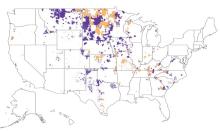
For years, national cable and telecom companies have complained that they operate in and industry plagued by too much competition. How valid is that claim? We decided to look at the data and map out what the large carriers offer and where they offer it. In order to share our findings with policy makers, local elected officials, and the general public, we’ve created a report that includes series of maps to illustrate our findings and our analysis.

Download Profiles of Monopoly: Big Cable and Telecom to read this report filled with maps that provide revealing visualizations about the status of broadband competition in the U.S.

Tier Flattening: AT&T and Verizon Home Customers Pay a High Price for Slow Internet

In recent years AT&T and Verizon, the nation’s two largest telco Internet providers, have eliminated their cheaper rate tiers for low and mid-speed Internet access, except at the very slowest levels. Each company now charges essentially identical monthly prices – $63-$65 a month after first year discounts have ended – for home wireline broadband connections at almost any speed up to 100/100 Mbps fiber service.

This policy of upward “tier flattening” raises the cost of Internet access for urban and rural AT&T and Verizon customers who only have access to the oldest, slowest legacy infrastructure.

Affordability is the greatest barrier to increased home broadband subscriptions. In the United States, broadband is becoming faster for some households and more expensive for others.

Download Tier Flattening: AT&T and Verizon Home Customers Pay a High Price for Slow Internet from the National Digital Inclusion Alliance to learn more about this practice that extracts the maximum while providing the minimum from those least able to afford it.

Reevaluating the Broadband Bonus: Evidence from Neighborhood Access to Fiber and United States Housing Prices

When the study, Reevaluating the Broadband Bonus: Evidence from Neighborhood Access to Fiber and United States Housing Prices, was written in 2015, only one in 11 households in the United States had Fiber-to-the-Home (FTTH) connections, according to a 2014 Broadband Communities primer, but that has changed as more and more studies have shown the economic benefits of fiber. The Fiber To The Home Council Americas funded a study in conjunction with the University of Colorado and Carnegie Mellon that showed a fiber dividend of $5,437 on a $175,000 home. Fierce Telecom reported on the results:

The boost to the value of a typical home – $5,437 – is roughly equivalent to adding a fireplace, half of a bathroom or a quarter of a swimming pool to the home.

Download the entire 2015 study here.

Community-Owned Fiber Networks: Value Leaders in America

The FCC collects data from Internet Service Providers that reflects census blocks where they offer service to at least one premise. Currently, the Commission does not collect information about rates subscribers pay. A new report from the Berkman Klein Center dives into prices subscribers pay and also looks at trends from national companies as well as local publicly owned networks. The report, Community-Owned Fiber Networks: Value Leaders in America, supports what we’ve always found — that publicly owned networks offer the best all around value for the communities that make the investment. Download the report.

Cooperatives Fiberize Rural America: A Trusted Model For The Internet Era

Rural communities across the United States are already building the Internet infrastructure of the future. Using a 20th century model, rural America is finding a way to tap into high-speed Internet service: electric and telephone cooperatives are bringing next-generation, Fiber-to-the-Home (FTTH) networks to their service territories. This policy brief provides an overview of the work that cooperatives have already done, including a map of the cooperatives' fiber service territories. We also offer recommendations on ways to help cooperatives continue their important strides.

Download the policy brief, Cooperatives Fiberize Rural America: A Trusted Model For The Internet Era here.

Comcast Spends Big on Local Elections: Would Lose Millions in Revenue from Real Broadband Competition

As the company with one of the largest ISPs in the nation, Comcast Corporation makes daily investment decisions. They choose to put company funds into a variety of ventures, from theme parks to hair color; all that matters is that the investment pays off. During the 2017 election season, Comcast once again devoted funds to an investment it considered necessary - influencing elections in Seattle and Fort Collins, Colorado. We prepared a policy brief to look deeper into Comcast's investment into the elections.

Download the brief hereComcast Spends Big on Local Elections: Would Lose Millions in Revenue from Real Broadband Competition.

Ammon Report: "Enabling Competition and Innovation on a City Fiber Network"

As Ammon, Idaho, celebrated the official launch of its publicly owned open access network on October 5th, 2017, the folks from Harvard University’s Digital Access to Scholarship at Harvard (DASH), shared Ammon’s story in their new report. Enabling Competition and Innovation on a City Fiber Network, by Paddy Leerssen and David Talbot provides the details of the community’s pioneering network that uses technology to increase competition for the benefit of citizens.

Emerging Issues in Expanding Next-Generation Internet Access: 2017 Policy Agenda

Next Century Cities’ “Emerging Issues in Expanding Next-Generation Internet Access: 2017 Policy Agenda” offers recommendations to local communities that want to improve and expand local connectivity. This policy agenda looks at some of the most recent issues facing cities and examines ways they’ve faced the challenges. Many of the examples in the policy agenda come from communities that are members of Next Century Cities.