
municipal broadband

Content tagged with "municipal broadband"

Displaying 21 - 30 of 206

Vineland, NJ Nabs $3.7 Million Grant To Begin Municipal Fiber Network

Vineland, New Jersey officials say they’ve secured a $3.7 million grant from the state that will help expand fiber and wireless broadband access to the city of 62,000. Local officials are hopeful the grant is just the beginning steps toward dramatic expansion of affordable access.

Vineland’s new grant was made possible by the New Jersey Broadband Infrastructure Deployment Equity (NJBIDE) grant program. NJBIDE will be delivering $40 million in broadband grants via the state’s Capital Projects Fund (CPF), made largely possible by the 2021 federal passage of the American Rescue Plan Act (ARPA).

NJBIDE grants prioritize fiber optic infrastructure of 100 megabytes per second (Mbps) and mandates the provision of at least one low-cost option (not specifically defined by New Jersey) to serve low income communities – something increasingly important in the wake of the federal government’s retreat from efforts to ensure equitable and affordable broadband. (Still early in the process, the city has not yet determined the exact pricing and service tiers the network will offer once construction is complete).

Image
A map outlining proposed network in Vineland NJ

A 2024 city proposal indicates that city leaders want to spend between $35 and $40 million to create a citywide broadband network, starting with a citywide fiber ring. The city paid for a viability study from Bonfire that found that at least 42 percent of the City does not have access to viable, quality, affordable broadband service.

Bountiful, Utah Finishes Muni-Fiber Network A Year Ahead Of Schedule

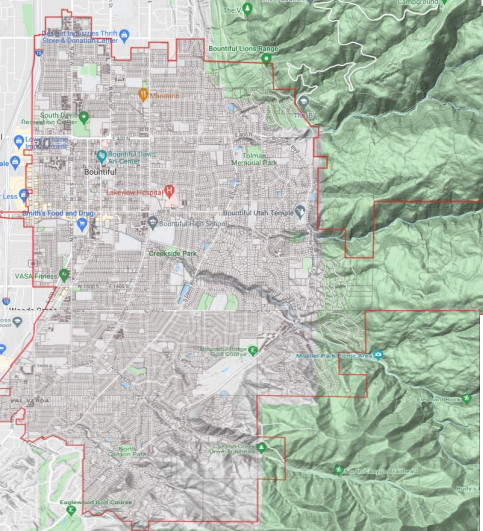
Officials in Bountiful, Utah say they’ve completed the city’s $48 million open access fiber network a year ahead of schedule, bringing fast, affordable broadband access to the Salt Lake City suburb of 45,000.

“We have completed the Bountiful City fiber project and built out the entire city with an open access network,” Utopia Fiber Executive Director Roger Timmerman recently said at the Fiber Connect Conference in Nashville, Tennessee. “This was a three-year project, and we completed it nearly a full year ahead of schedule.”

In a unanimous city council vote in the summer of 2023, officials approved $48 million in bonds to fund construction of the city-owned open access fiber network. 

Like UTOPIA’s broader network, the city then leases access out to numerous independent ISPs, creating a massive influx of competitive, affordable last mile fiber access.

Image
Bountiful map

The city of Bountiful owns the network while UTOPIA designed, built and manages the network and takes a share of the revenue.

Thanks to the partnership, locals now have access to 14 different competing broadband providers, offering symmetrical and affordable 250 megabit per second (Mbps), 1 gigabit per second (Gbps), 2.5 Gbps, and 10 Gbps tiers – plus a $38 to $44 local network access charge.

UTOPIA officials say the network currently passes around 16,500 addresses, and they’ve been seeing 200 signups per month.

“We need a year to really answer that question,” Timmerman said when asked for specifics on area adoption rates. “In Bountiful we’re confident we’ll get take rates of 40% or higher. There’s a lot of demand there.”

Syracuse, NY Community Broadband Network Steadily Expands

Syracuse, NY officials say the city’s community-owned broadband network Surge Link continues to dramatically expand two years after the network first launched, bringing affordable broadband access to the city of 145,000 – with a particular eye on helping the city’s disadvantaged.

A recent update from the city states that the network now serves more than 9,200 households in Syracuse, located in central upstate New York. The latest expansion brought the service into the city’s Valley, Skunk City, Washington Square, Northside, Prospect Hill and Hawley-Green neighborhoods in early July.

The Surge Link initiative is part of a broader $15 million investment into fixed-wireless access broadband infrastructure into a city traditionally left underserved by giant regional telecoms.

A lack of competition between dominant regional monopolies Charter (Spectrum) and Verizon has resulted in spotty access, high prices, and slow speeds.

Image
Syracuse Mayor Ben Walsh speaks at podium in front of community center at Surge Link launch party

The lion’s share of Surge Link’s latest expansion was made possible by a $10.8 million grant from the New York State ConnectALL initiative, a multi-layered billion-dollar project to dramatically boost high speed Internet access across the state leveraging a series of new grant programs, education initiatives, broadband mapping improvements, and digital equity proposals.

Sonoma County, CA To Offer Free Broadband To Low-Income Residents

In the wake of a federal abandonment of most meaningful Internet equality efforts, California municipalities continue to take the fight for equitable broadband access into their own hands. 

That includes Sonoma County, California, where county officials have freshly greenlit expanded plans to provide free broadband access to low income residents.

Image
Map of California that shows Sonoma County on Northern California's coastline

Target: Affordable Housing

The Sonoma County Board of Supervisors recently announced that it has approved a list of new affordable housing sites that are eligible to receive free Internet for one year.

According to the county, 556 low-income Sonoma County households across 10 different housing locations should qualify for the free broadband service.

The deployments are being made possible by the 2021 American Rescue Plan Act (ARPA), which continues to result in some fairly transformative fiber deployments countrywide.

“The Board has prioritized finding creative solutions to broadband infrastructure development in Sonoma County,” Board of Supervisors Chair Lynda Hopkins says of the effort.

“This free internet program is a step toward equity as we continue to pursue public funding and strategic partnerships that can finally close the digital divide facing many of our shared communities.”

NY State’s Dryden Fiber Celebrates 400th Local Subscriber

In early 2023, Dryden, New York, formally launched the town’s municipal broadband network, becoming the first municipality in the state to provide residents with direct access to affordable, publicly owned fiber.

A year and a half later, and the town of 14,500 says they’ve just signed up their 400th subscriber and continue to make steady progress expanding the popular network into rural enclaves in and around Dryden long deemed “unprofitable” by regional telecom monopolies.

Dryden Fiber Executive Director David Makar tells Ithaca-based local news outlet 607 News Now that the first year and a half of operations focused on building the core fiber ring around the city.

They’ve since shifted to the time-consuming task of extending last mile fiber access out to rural unserved and underserved homes in Dryden and nearby Caroline (population 3,321).

“There’s about 500 households between Dryden and Caroline that if they want to get online – it’s dial up modems, like it’s the year 2000,” Makar says. “Since we are very rural…there’s no easy way to get a lot of these houses,” he notes, indicating that the logistics and permissions for rural pole attachments have been unsurprisingly time consuming.

Image
Dryden fiber groundbreaking

Makar said there’s about 800 homes currently waiting for access in many of these rural areas.

“Perseverance:” Maine’s Isle Au Haut Builds Its Own Fiber Network

Last year we noted how “scrappy” Island residents in Maine were taking matters into their own hands and building their own fiber broadband networks despite massive financial and logistic challenges. One such community, Isle au Haut, says it has completed its fiber deployment with ample help from locals – and federal and state grants.

After a decade of planning, several dozen residents of the island (with a summer population of around 300) recently celebrated a ribbon cutting ceremony on June 28, alongside build partners that included the Island Institute, Axiom Technologies, and Hawkeye Fiber Optics.

The deployment required the construction of a new six mile undersea fiber run, the creation of a new central switch station near the town landing, and last mile fiber deployment to residents currently connected to the power grid. All overseen by the The Isle Au Haut Broadband Committee, first established back in 2018.

Image
A crew of two workers at back of work truck getting ready to deploy fiber strands

In 2022, Isle au Haut was awarded a grant from the National Telecommunications and Information Administration, (NTIA) with matching funds contributed by the State of Maine and the Maine Connectivity Authority.

Hudson, Ohio Accepting Bids For Citywide Fiber Build

Hudson, Ohio officials are now accepting bids on a promising new fiber-to-the-home network that should dramatically improve affordable, next-generation broadband access in the city of 23,000.

It’s just the latest effort by a city that has been exploring the option of municipal broadband infrastructure for more than a decade.

Just 15 miles north of Akron, the city has spent the better part of the last three years preparing to forge a new public-private-partnership (PPP) to expand access.

The city already owns and operates its own broadband network (Velocity Broadband, launched in 2015), but it exclusively serves the city’s businesses with gigabit-capable fiber.

The city’s new partnership would leverage that existing business network and core fiber assets to finally bring fiber optic connectivity to the city’s residents.

“The proposed work includes the installation of new fiber optic infrastructure, including approximately 11,750 lineal feet of 1.5-inch underground HDPE fiber conduit via horizontal directional drilling, 7,900 lineal feet of new aerial fiber, the placement of underground fiber vaults and handholes, and the subsequent fiber optic cable installation and testing,” the city’s proposal states.

In ProMarket: A Wave of Telecom Mergers

The CBN team's Associate Director for Communications Sean Gonsalves recently published a piece in ProMarket about the continuing consolidation of telecommunication markets and why municipal broadband is a better option. He writes:

"Last month, AT&T announced it would acquire all of Lumen Technologies’ fiber internet business for $5.75 billion. According to a company statement, the purchase will net AT&T one million fiber customers and significantly expand its fiber footprint in Denver, Las Vegas, Minneapolis-St. Paul, Orlando, Phoenix, Portland, Salt Lake City, and Seattle.

Across AT&T and Lumen’s service areas, where they offer wired or licensed fixed wireless Internet service, more than half of the locations they claim to serve have two or fewer options for high-speed internet service.

Good news for AT&T stockholders. Not so good news for broadband-hungry subscribers who, for years now, have been paying among the highest prices for internet service of any developed nation in the world. Ever wonder why that is? The answer is as painfully obvious as our overpriced monthly internet bills.

Image
A file tab reads "mergers and acquisitions"

When big telecom giants consolidate—especially in a market where most people have only one or maybe two internet service providers (ISPs) to choose from—the results are predictable: without meaningful competition for something as fundamental as internet connectivity in an internet-connected world, monopolists have no incentive to improve service, invest in network upgrades, or compete on price.

Monahans, Texas Builds Its Own ‘Labor Of Love’ Fiber Network

Tired of the high prices, spotty coverage, and slow speeds of regional monopoly broadband providers, the remote West Texas city of Monahans has spent the last decade taking matters into their own hands.

Now, thanks to hard work, determination, and local philanthropy, the city’s 7,500 residents are headed for the right side of the digital divide.

Carroll Faulkner, who consulted with the city on its project, and Teresa Burnett, executive director of the Monahans Chamber of Commerce, told ILSR the project to bring Monahans into the modern era has been a challenging labor of love.

It has recently culminated in the completion of the first phase of the project, bringing affordable fiber to around 2,000 residents in city 36 miles southwest of Odessa.

Image
oil rig behind a wired fence in Sandhills State Park

“We are very passionate about this project,” Burnett told ILSR. “It's been a lot of ups and downs, and it's been 10 long years.”

The city’s network build is in partnership with Hosted America, which is acting as the first last mile ISP serving residents, and View Capital’s American Fiber Infrastructure Fund, which technically owns the finished network. Hosted America enjoys early exclusive usage of the network, but the duo say the network will ultimately be open access, allowing numerous partners.

Phase one of the network plan was completed roughly a year ago, bringing affordable fiber for the first time ever to around 2,000 locals. The full cost of phase one was expected to be around $4.5 million, said Faulkner, of which around $1 million was funded by the 2020 Coronavirus Aid, Relief, and Economic Security (CARES) Act.

The remainder of the funding was obtained from View Capital and a coalition of philanthropic organizations.

Clallam County, WA Launches $22 Million Fiber Expansion Plan

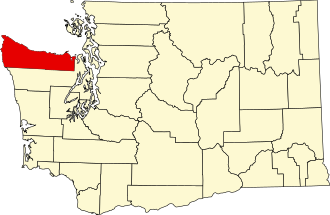
Clallam County, Washington and Astound Broadband have begun construction on a major new joint partnership that will bring affordable fiber access to more than 1,500 homes across the largely rural Northwestern part of The Evergreen State.

In a joint announcement, Astound states that it will be deploying more than 100 miles of fiber across long-neglected Clallam County, starting with a 15-mile deployment along the State Route 112 Highway corridor, beginning just west of Port Angeles.

The deployment is a joint collaboration between The Public Utility District (PUD) No. 1 of Clallam County, Astound Broadband, and the Northwest Open Access Network (NOANet), a nonprofit coalition developed by regional Washington Communications Utility Districts (CUD) to bring more reliable, affordable fiber access to neglected rural Washington communities.

Image
Clallam County WA map

Clallam county uses the NOANet fiber optic system for real-time metering, energy management, load control, and networking among remote utility facilities, though they’re keen to leverage the open access network to help provide last mile residential service.

The new $22 million fiber investment is being funded by a combination of a $16 million grant from the the Washington State Broadband Office made possible by the American Rescue Project Act (ARPA), $4.5 million from the Washington State Department of Commerce Public Works Board Broadband Program, and $1.7 million in funding from Clallam County.

The expansion will provide last mile fiber access to at least 1,500 new local residents, but will also prioritize bringing fiber to fire houses, schools, libraries, medical clinics, and other key anchor institutions in the county of 78,000.