
infrastructure

Content tagged with "infrastructure"

Related Topics
Displaying 21 - 30 of 145

Illinois (and Possibly New York) Poised to Fumble Federal Broadband Funds

Now that the fight over federal funding to expand broadband access has been largely settled with the passage of the American Rescue Plan Act (ARPA) and the Infrastructure Investment and Jobs Act (IIJA), states and local communities are preparing to put those funds to work.

The Biden Administration had initially hoped to tip the scales in favor of building publicly-owned broadband networks as the best way to boost local (more affordable) Internet choice, and inject competition into a market dominated by monopoly incumbents. And while the Treasury rules on how Rescue Plan money can be spent does give states and local governments the ability to do just that, the rules for how the IIJA’s Broadband Equity, Access, and Deployment (BEAD) program can be spent have yet to be finalized by the National Telecommunications and Information Administration (NTIA), the agency in charge of allocating those funds to the states.

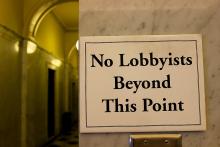
Predictably, the big monopoly incumbents are focusing their lobbying efforts on state lawmakers as states funnel those federal funds into state broadband grant programs. In some states, Big Telco is getting the desired result: the shunning of publicly-owned network proposals to shield monopoly providers from competition. Of course, we expected some states – especially those with preemption laws that either erect barriers to municipal broadband or outright ban such networks – to shovel most of their federal broadband funds to the big incumbents, even though they have a long track record of over-promising and under-delivering

But while we might expect Florida and Texas to favor the private sector and stealthily move to shut out projects that are publicly-owned, we’re surprised that the first place it’s happening is actually Illinois and New York.

Illinois Lawmakers Thumb Nose at Federal Law

Apply for AARP's Community Challenge Grant Program

AARP has announced the latest round of its Community Challenge Grant Program, an effort to direct funding towards building more resilient, livable, equitable communities around the country. Applications for the current round are due March 22nd at 5pm ET.

Part of the AARP's Livable Communities initiative, this is the sixth iteration of the grant program, which led to the funding of more than $9 million in projects across 800 grants to nonprofits and local governments in rural, urban, and suburban areas. This includes everything from improved city infrastructure, to trainings, to new volunteer programs, to the support of local cultural and art initiatives.

Watch a video of the announcement below, or visit here to learn more.

Treasury Simplifies, Improves Rules for Rescue Plan Aid for Broadband Networks

Communities across the United States got an unexpected gift from the Biden Administration last week in the form of additional flexibility to use Rescue Plan funds for needed broadband investments, particularly those focused on low-income neighborhoods in urban areas. 

When Congress developed and passed the American Rescue Plan Act, it tasked the Treasury Department with writing the rules for some key programs, including the State & Local Fiscal Recovery Funds (SLFRF). That program is distributing $350 billion to local and state governments, which can use it for a variety of purposes that include broadband infrastructure and digital inclusion efforts.

Treasury released an Interim Final Rule in May, 2021, detailing how local governments would be allowed to invest in broadband. I promptly freaked out, at the restrictions and complications that I (and others) feared would result in local governments backing away from needed broadband investments due to fears of being out of compliance with the rule. 

After we worked with numerous local leaders and the National League of Cities to explain the problems we saw in the proposed rule, Treasury released updated guidance in the form of a Q&A document to explain how local governments would be able to build and partner for needed networks. 

Given the many challenges the Biden Administration has had to deal with, we did not expect significant new changes to the Rescue Plan rules around the SLFRF. But after many months of deliberations, the Treasury Department has resolved all of the concerns that we identified as areas of concern in May. 

As we explain below, local governments have wide latitude to use SLFRF funds for a variety of needed broadband infrastructure investments, especially to resolve affordability challenges.

Summary and TL;DR


Join Us Thursday at 5pm ET for Episode 29 of the Connect This! - New Year, New Rules

In this episode of the Connect This! Show, co-hosts Christopher and Travis Carter (USI Fiber) are joined by Kim McKinley (UTOPIA Fiber) and Doug Dawson (CCG Consulting) to kick off the new year.

The panel will dig into the recently released Final Rules released by the Treasury on use of the Rescue Plan dollars, before diving into some regional developments in New York and Los Angeles. They'll end by sharing some thoughts about how the broadband landscape is likely to shape up during the coming year.

Subscribe to the show using this feed on YouTube Live or here on Facebook Live, or visit ConnectThisShow.com

Email us broadband@muninetworks.org with feedback and ideas for the show.

Watch here, or below.

A Look Back on the Biggest Broadband Stories of 2021 - Episode 486 of the Community Broadband Bits Podcast
On this week’s episode of the Community Broadband Bits Podcast, Christopher Mitchell invites the Community Broadband Networks Initiative staff onto the show to talk about what they believe were some of the biggest broadband stories of 2021. The group reminisces about what has been one of the most pivotal years for broadband infrastructure investment and community-led solutions to the digital divide, and ruminates on what’s to come in 2022.

This show is 60 minutes long and can be played on this page or via Apple Podcasts or the tool of your choice using this feed

Transcript below. 

We want your feedback and suggestions for the show-please e-mail us or leave a comment below.

Listen to other episodes here or view all episodes in our index. See other podcasts from the Institute for Local Self-Reliance here.

Thanks to Arne Huseby for the music. The song is Warm Duck Shuffle and is licensed under a Creative Commons Attribution (3.0) license.
Join Us Thursday, December 16th at 5pm ET for Episode 28 of the Connect This! Show

Join us live on Thursday, December 16th at 5pm ET for Episode 28 of the Connect This! Show, where co-hosts Christopher and Travis Carter (USI Fiber) will be joined by returning guests Doug Dawson (CCG Consulting) and Kim McKinley (UTOPIA Fiber) to catch up on the news of the week and check in on a number of issues.

The panel will discuss, among other things, the transition from the Emergency Broadband Benefit to the Affordable Connectivity Program, restrictive access and exclusive wiring agreements in apartment buildings, and where the NTIA is on administering the more than $42 billion in new broadband infrastructure.

Subscribe to the show using this feed, or visit ConnectThisShow.com

Email us broadband@muninetworks.org with feedback, ideas for the show, or your pictures of weird wireless infrastructure to stump Travis.

Watch here or below on YouTube Live, via Facebook Live here, or follow Christopher on Twitter to watch there.

What States, Communities, and Activists Need to Do to Make the Most of the Infrastructure Act - Episode 484 of the Community Broadband Bits Podcast

On this week’s episode of the Community Broadband Bits Podcast, Christopher Mitchell brings back a longtime favorite guest, Jon Chambers, Partner at Conexon, to talk about what is next for municipal and cooperative broadband efforts given the Infrastructure Investment and Jobs Act.

The two discuss the importance of rural cooperatives when connecting some of the most underserved areas of country. Chamber said the number of dollars isn’t what’s impacting the increased connectivity around the country. The impact depends on where those dollars are going, and this infrastructure legislation will hopefully create a more direct line to cooperatives, given the fact it will be dispersed through block grants to the states. 

They talk about new issues that could arise given the FCC’s new polygon mapping method and how it will almost certainly slow down disbursement of funds. 

Finally, they hone in on what communities can do to help channel these dollars in the right direction and bring high-speed, reliable Internet to folks across the country. 

This show is 49 minutes long and can be played on this page or via Apple Podcasts or the tool of your choice using this feed

Transcript below. 

We want your feedback and suggestions for the show-please e-mail us or leave a comment below.

Listen to other episodes here or view all episodes in our index. See other podcasts from the Institute for Local Self-Reliance here.

Thanks to Arne Huseby for the music. The song is Warm Duck Shuffle and is licensed under a Creative Commons Attribution (3.0) license.

Join Us Live, Thursday, November 18th at 5pm to Talk About Billions in Broadband Infrastructure - Episode 26 of the Connect This! Show

Join us live on Thursday, November 18th at 5pm ET for Episode 26 of the Connect This! Show, where co-hosts Christopher and Travis Carter (USI Fiber) will be joined by Kim McKinley (UTOPIA Fiber) and Doug Dawson (CCG Consulting) to talk about all things related to the recently passed Infrastructure Investment and Jobs Act, inside of which is more than $42 billion in broadband infrastructure money in the Broadband Equity, Access, and Deployment (BEAD) Program. 

The panel will tackle all the burning questions you have. How does this fit in with the other pots of infrastructure money? What's the long-term outcome of such a large commitment likely to be? What's the timeline for rulemaking? How can communities put themselves on a path to win grants? 

They'll also talk about a new ILSR report, published last week, which analyzes price and billing transparency for Internet service between different types of providers.

Subscribe to the show using this feed, or visit ConnectThisShow.com

Email us broadband@muninetworks.org with feedback, ideas for the show, or your pictures of weird wireless infrastructure to stump Travis.

Watch here or below on YouTube Live, via Facebook Live here, or follow Christopher on Twitter to watch there.

Infrastructure Bill Passes: ‘Our Broadband Moment’

This past Friday Congress finally passed the bipartisan Infrastructure Investment and Jobs Act. The legislation includes $65 billion to boost high-speed Internet connectivity – “the largest (federal) investment in broadband deployment ever,” as noted by Benton Institute for Broadband & Society. This is an historic piece of legislation that includes many of the things we wanted to see in it and we believe it will significantly help solve broadband challenges for many who have not yet been well connected. 

There are two major buckets of broadband money that will be made available to states and tribal governments: $42.5 billion for the deployment of infrastructure, which will be mostly aimed at rural communities, with the rest going toward digital inclusion efforts.

While we have not yet gone through the final version with a fine-toothed comb, the broadband portion of the infrastructure bill appears to be identical to what was in the bipartisan Senate version of the bill, which we previously wrote about here.

Image

Rural America Biggest Beneficiary

The $42.5 billion portion of the bill will be allocated to the States in the form of block grants under the Broadband Equity, Access, and Deployment (BEAD) Program, which will be administered by the U.S. Department of Commerce's National Telecommunications and Information Administration (NTIA).

New Treasury Rules: Good News for Community-Driven Broadband Solutions

The U.S. Department of Treasury, tasked with writing the rules on how state and local governments can spend various federal relief funds made available for broadband expansion by the American Rescue Plan, recently released the guidelines [pdf] governing the Capital Projects Fund (CPF) — a $10 billion pot of money available to states, territories, and Tribal governments [pdf] to confront the need for improved Internet connectivity exposed during the pandemic.

Compared to when Treasury released rules governing the State and Local Fiscal Recovery Funds earlier this year, this go ‘round brought cheers instead of jeers from community broadband advocates, as we are seeing federal broadband policy break new ground.

The flexibility the Capital Projects Fund gives state and local governments to decide how to spend the relief funds is what broadband advocates are most excited about. CPF applicants are able to use the money in creative ways to respond to critical needs in their community laid bare by the Covid-19 pandemic, as long as the resulting project directly enables remote work, education, and health monitoring.