
Frontier

Content tagged with "Frontier"

Displaying 1 - 10 of 67

Mergers, Monopoly Prices, and Accountability - Episode 676 of the Community Broadband Bits Podcast

In this episode of the podcast, Chris is joined again by Doug Dawson and Sean Gonsalves for a fast-moving discussion of the latest developments reshaping the broadband landscape. 

The trio unpacks a wave of major telecom mergers, including AT&T’s acquisition of Lumen assets and Frontier’s consolidation, and what growing market power means for prices, competition, and consumers.

They dig into new research from Chattanooga showing the long-term economic and community benefits of municipal fiber, alongside a major California Public Utilities Commission study revealing how lack of competition drives higher broadband prices—especially for low-income households. 

Doug explains how ISPs increasingly use neighborhood-by-neighborhood pricing tactics, leaving long-time customers paying the most for the slowest speeds.

The conversation also revisits Starlink’s controversial demands to rewrite BEAD program rules, the uncertain future of non-deployment funds, and why satellite solutions continue to fall short of their promises. 

Rounding out the episode, the group explores emerging pressures from AI-driven bandwidth demands, consolidation in wholesale fiber markets, and troubling legal trends that raise questions about accountability, regulation, and consumer protections.

This show is 51 minutes long and can be played on this page or via Apple Podcasts or the tool of your choice using this feed

You can also check out the video version via YouTube.

Transcript below.

We want your feedback and suggestions for the show-please e-mail us or leave a comment below.

Listen to other episodes or view all episodes in our index. See other podcasts from the Institute for Local Self-Reliance.

Thanks to Arne Huseby for the music. The song is Warm Duck Shuffle and is licensed under a Creative Commons Attribution (3.0) license

A $20 Verizon Internet Deal on Paper – Will Depend Heavily on Enforcement

California’s Public Utilities Commission (CPUC) recently signed off on Verizon’s $20 billion merger with telecom giant Frontier with some notable conditions. As part of Verizon’s settlement with the CPUC, they’re being required to offer affordable broadband, improve network resilience, and expand fiber and cellular access into long-neglected portions of the Golden State.

According to the CPUC approval announcement, the agency voted 5-0 to approve the merger after months of deliberation and negotiation with Verizon.

One cornerstone of the CPUC’s agreement is that Verizon will be required to offer significant support for its "Verizon Forward" service, which offers home Internet access for as low as $20 a month (either 300 megabit per second (Mbps) symmetrical fiber or 100/20 Mbps wireless) to California homes that qualify for existing low-income assistance programs.
 
Under that part of the arrangement, Verizon pledges to maintain that $20 per month price point for the next decade.

Verizon’s Frontier Deal Comes With Strings Attached

This comes on the heels of a recent CPUC study that found “the average monthly price for a plan at or above 100 megabits per second (Mbps) download and 20 Mbps upload – the Federal Communications Commission’s benchmark for broadband speeds – is $116.68” – “far above what many households can afford.” The study further indicates that in large swaths of the state “low-income households spend more than 15% of their discretionary income on broadband service.”

California Regulators To Include Broadband Affordability Requirements In Verizon Frontier Merger Approval

The California Public Utilities Commission (CPUC) is poised to include new broadband affordability requirements as part of the state’s looming approval of Verizon’s massive $20 billion merger with Frontier Communications, even as some consumer advocacy groups worry the changes may not go quite far enough to hold Verizon accountable.

The CPUC’s Public Advocates Office has struck a partial settlement with Verizon that the state hopes will take some of the sting out of the telecom industry’s latest consolidation spree.

Verizon’s $20 billion proposed merger with Frontier would merge two of the nation’s top four traditional phone companies, resulting in a telecom giant with assets across 31 states. The merged new company would have more than 9.6 million customers with a fiber network that ultimately passes more than 25 million fiber homes and businesses.

While the two companies don’t directly compete, Verizon’s political influence and market power will still increase. Both companies have long been criticized for lobbying to undermine U.S. broadband competition, then leveraging the resulting regional market failure to jack up consumer costs and neglecting aging DSL network upgrades and repairs.

In ProMarket: A Wave of Telecom Mergers

The CBN team's Associate Director for Communications Sean Gonsalves recently published a piece in ProMarket about the continuing consolidation of telecommunication markets and why municipal broadband is a better option. He writes:

"Last month, AT&T announced it would acquire all of Lumen Technologies’ fiber internet business for $5.75 billion. According to a company statement, the purchase will net AT&T one million fiber customers and significantly expand its fiber footprint in Denver, Las Vegas, Minneapolis-St. Paul, Orlando, Phoenix, Portland, Salt Lake City, and Seattle.

Across AT&T and Lumen’s service areas, where they offer wired or licensed fixed wireless Internet service, more than half of the locations they claim to serve have two or fewer options for high-speed internet service.

Good news for AT&T stockholders. Not so good news for broadband-hungry subscribers who, for years now, have been paying among the highest prices for internet service of any developed nation in the world. Ever wonder why that is? The answer is as painfully obvious as our overpriced monthly internet bills.

Image
A file tab reads "mergers and acquisitions"

When big telecom giants consolidate—especially in a market where most people have only one or maybe two internet service providers (ISPs) to choose from—the results are predictable: without meaningful competition for something as fundamental as internet connectivity in an internet-connected world, monopolists have no incentive to improve service, invest in network upgrades, or compete on price.

Bell Canada’s Ziply Acquisition Raises Questions About Open Access In The Pacific Northwest

Canada’s biggest telecom giant has acquired Ziply Fiber – and a sizable swath of municipal operation agreements for open access fiber scattered across the Pacific Northwest. Bell Canada and Ziply’s joint announcement indicates that the full deal will be around $5 billion Canadian, plus an additional $2 billion in acquired debt.

The acquisition could help accelerate Ziply’s planned expansion across the Pacific Northwest, where the company’s fiber network currently passes 1.3 million locations across Montana, Idaho, Oregon, and Washington State.

At the same time, Bell Canada’s history of anti-competitive behavior could herald a culture shift at the ascending provider. Ziply and Bell Canada’s rapid-fire acquisition of smaller providers across the Pacific Northwest could also risk undermining the pro-competitive benefits of the kind of open access policies Ziply previously embraced.

Image
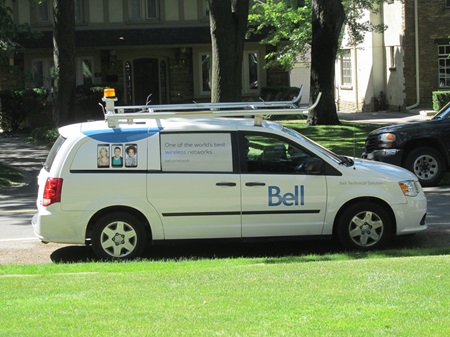
Bell Canada service vehicle

Ziply was formed when WaveDivision Capital purchased Frontier Communications’ Pacific Northwest operations in 2020. It has quickly become a major player across the four states thanks in part to numerous public private partnerships with municipalities, and a 2022 announcement of $450 million in new private sector funding.

Resilient Networks, BEAD Hypocrisy, and the 2024 Election | Episode 100 of the Connect This! Show

Connect This show

Catch the latest episode of the Connect This! Show, with co-host Christopher Mitchell (ILSR) joined by regular guests Kim McKinley (UTOPIA Fiber) and Doug Dawson (CCG Consulting) and special guests Gigi Sohn (American Association for Public Broadband) and Blair Levin (New Street Research) to celebrate 100 episodes of the show. Topics include:

Join us live on October 24, at 2pm ET or listen afterwards wherever you get your podcasts.

Email us at broadband@communitynets.org with feedback and ideas for the show.

Subscribe to the show using this feed or find it on the Connect This! page, and watch on LinkedIn, on YouTube Live, on Facebook live, or below.

Remote video URL

Convergence is Here | Episode 99.3 of the Connect This! Show

Connect This

Join us Thursday, September 12th at 2pm ET for the latest episode of the Connect This! Show. Co-hosts Christopher Mitchell (ILSR) and Travis Carter (USI Fiber) will be joined by regular guests Kim McKinley (UTOPIA Fiber) and Doug Dawson (CCG Consulting) to talk about Verizon buying Frontier, AT&T working with Gigapower on open access efforts, Charter still not deploying CBRS, and more.

Email us at broadband@communitynets.org with feedback and ideas for the show.

Subscribe to the show using this feed or find it on the Connect This! page, and watch on LinkedIn, on YouTube Live, on Facebook live, or below.

Remote video URL

Pennsylvania Snubs Community Broadband, Small ISPs In Latest Broadband Grant Round

Telecom monopolies have hoovered up the lion’s share of $214 million recently doled out by the Pennsylvania state Broadband Infrastructure Program (BIP), with cooperatives, smaller ISPs, and community-owned networks left largely out in the cold.

It’s not a surprising move for a state long considered politically hostile to community-owned and operated broadband networks, though industry experts say this latest round of awards was particularly egregious when it comes to dodgy politics and its total lack of any real transparency.

According to an announcement by the Pennsylvania Broadband Development Authority (PBDA), this $204 million in Broadband Infrastructure Program (BIP) grant awards will help fund 53 projects in 42 counties across Pennsylvania, connecting 40,000 homes and businesses, bringing high-speed Internet to over 100,000 Pennsylvanians.

Image
PA Broadband Development Authority logo

The awards were funded with the state’s Capital Projects Fund allocation. After matching funds by winning bidders are included, the total broadband investment is expected to exceed $407 million. A complete breakdown of all grant award winners can be found here.

Verizon was the biggest grant award winner, nabbing $78.3 million. Other big grant award winners were Comcast ($61.7 million), Windstream ($12 million) Frontier ($3.5 million) and Brightspeed ($782,000). A few small private ISPs also won awards including Adams Cable ($387,969) Upward Broadband ($1,476,288) and Alleghenies Broadband ($1,809,524).

Wired for Good: Exploring Rural Connectivity in West Virginia - Episode 597 of the Community Broadband Bits Podcast

In this latest episode of the podcast, Chris is joined by Derek Barr, Assistant General Manager at Hardy Telecommunications in West Virginia. Together, they delve into the intricate world of nonprofit cooperatives, focusing on the journey of Hardy Telecommunications since its inception in 1953. 

Originally established to fill the service gap left by larger providers, Hardy Telecommunications has since expanded its offerings to include broadband services, becoming a lifeline for rural communities with about 6,100 access lines and nearly 5,100 broadband customers.

Derek candidly shares the rollercoaster ride of being a small provider, from wearing multiple hats to navigating the maze of regulatory changes. They explore the ripple effects of federal funding programs like the Broadband Initiatives Program (BIP) and the Rural Digital Opportunity Fund (RDOF) on their expansion efforts.

But it's not just about challenges; Chris and Derek paints a picture of hope through partnerships with counties and emphasizes the ongoing need for support and funding to keep the broadband momentum going in rural areas.

This show is 36 minutes long and can be played on this page or using the podcast app of your choice with this feed.

Transcript below.

We want your feedback and suggestions for the show: please e-mail us or leave a comment below.

Listen to other episodes here or see other podcasts from the Institute for Local Self-Reliance here.

Thanks to Arne Huseby for the music. The song is Warm Duck Shuffle and is licensed under a Creative Commons Attribution (3.0) license.

New $4 Million Open Access Project Brings Fiber Service To Rural West Virginia

A new $4 million project funded by the Appalachian Regional Commission (ARC) and the U.S. Economic Development Administration will help bring affordable fiber broadband to long underserved parts of West Virginia.

The project primarily targets the rural counties of Randolph and Tucker, long stuck on the wrong side of the digital divide.

The RFP for the open access middle- and last-mile file project was issued last summer, seeking partners to help maintain the network and manage access leases in partnership with the Woodlands Development Group (WDG), which will own the finished network.

“The Route 33 Broadband Deployment Project will deploy backbone fiber from Elkins along Route 33 through Bowden, north to Harman, up to Canaan Valley, and ending in Davis, establishing last-mile broadband access to 40 businesses, and enabling future last-mile projects to serve at minimum 480 households and 25 additional businesses located within 1,000 ft of the backbone fiber,” the RFP states.

Image
West VA Woodlands Development Group Fiber Map

WDG, a 501(c)(3), had already been awarded a $1.7 million grant laying the foundation of the effort courtesy of 2021 COVID relief legislation (courtesy of the American Rescue Plan Act). The remainder of the $4 million project will be funded by the Appalachian Regional Commission and the U.S. Economic Development Administration.