
Digital C

Content tagged with "Digital C"

Related Topics
Displaying 1 - 10 of 15

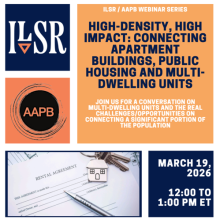
ILSR and AAPB Webinar Shines Light on Connecting Multi-Family Housing

Closing the digital divide where it's most dense – inside multi-family housing – took center screen during yesterday's webinar hosted by the Institute for Local Self-Reliance Community Broadband Networks Initiative and the American Association for Public Broadband (AAPB).

Co-host and AAPB Executive Director Gigi Sohn framed the discussion as a new way of thinking about universal broadband access. 

"If you want to connect a community, we can’t just think street by street. We have to also think floor by floor, building by building," Sohn said. 

"Apartment complexes, public housing, condos, and mobile home parks contain some of the largest concentrations of unserved and underserved households in the country. These buildings should be cost-efficient to serve, but in reality they often present some of the toughest barriers – from wiring challenges and access restrictions to exclusive provider agreements and outdated policies."

The webinar, "High-Density, High Impact: Connecting Apartment Buildings, Public Housing and Multi-Dwelling Units," featured Cleveland-based DigitalC CEO Joshua Edmonds; REVinternet founder and CEO Brendan Kelly; and Anna Read, a Principal with the national consulting firm HR&A.

The conversation ranged from why MDU's matter to the business and technical realities of providing Internet access to those who live in them; as well how federal and state policies have helped or hindered the push to ensure everyone has the ability to meaningfully participate in a digital world.

Watch the webinar in its entirety below:

Event: High Density, High Impact - Connecting Apartment Buildings and Public Housing

Today at 12pm ET/11am CT, ILSR and the American Association of Public Broadband co-host an event aimed at tackling the digital divide in a realm rife with both challenges and opportunities: apartments, public housing, and multi-dwelling units. 

Co-hosted by AAPB’s Gigi Sohn and ILSR’s Community Broadband Networks’ Associate Director for Communications Sean Gonsalves, they will be joined by Cleveland-based DigitalC CEO Joshua Edmonds; REVinternet founder and CEO Brendan Kelly; and Anna Read, a Principal with the national consulting firm HR&A who previously worked on broadband funding at the U.S. Treasury Department and also with several states in establishing programs to help connect public housing residents.

This event is free to register.

Where the Digital Divide Is Densest: Why Universal Internet Access Runs Through Apartment Buildings

On paper, it’s cheaper to connect densely-clustered residences. But, as many as 4.3 million households inside apartment, condo, and mobile-home complexes do not have Internet access – either because the service is unaffordable or because the building has antiquated wiring.

Given the importance of Internet access for meaningful participation in a digital economy – and because universal access to high-speed Internet has cascading community benefits that not only save subscribers and municipalities money, but also improve health outcomes – more cities and towns are looking to ensure high-performance Internet access is available in what industry insiders call “multi-dwelling units” (MDUs).

Next week, the increasingly popular webinar series hosted by the Institute for Local Self-Reliance (ILSR) Community Broadband Networks initiative and the American Association of Public Broadband (AAPB) will dive into the challenge head-on with a focus on how local communities can better serve the places where the largest numbers of disconnected Americans are clustered.

The free webinar – “High-Density, High Impact: Connecting Apartment Buildings, Public Housing and Multi-Dwelling Units” – is slated for March 19 from noon to 1 pm ET.

Registration is now open here.

“Most of the federal government’s funding focus for building new networks is targeted at sparsely populated rural areas. But the fact is: apartment buildings – especially those living in public housing in urban and suburban settings – represent large concentrations of unconnected or underconnected households,” AAPB Executive Director Gigi Sohn said. 

Cleveland’s DigitalC Gets $500K Google Infusion For Affordable Fixed Wireless

Innovative digital equity nonprofit DigitalC has been working for years to shore up affordable broadband access in underserved cities like Cleveland, Ohio. 

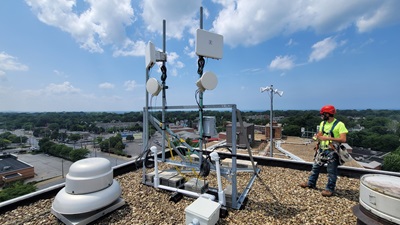
Now the organization is enjoying new momentum for its plans to expand fixed wireless broadband access in the city thanks to a $500,000 cash infusion from tech giant Google. According to a recent announcement, the donation includes next-generation Fixed Wireless Access (ngFWA) equipment from Tarana, which will allow DigitalC to expand its Canopy home broadband service – which provides symmetrical 100 megabit per second (Mbps) at $18 a month – to even more neighborhoods in Ohio.

The nonprofit just celebrated the connection of its 6,000th household in Cleveland, a city once ranked the worst-connected large city in the U.S. by the National Digital Inclusion Alliance (NDIA).

Image
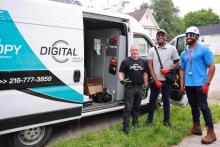
Digital C worker on rooftop

“This meaningful investment from GFiber adds bandwidth to our capacity to scale the Cleveland Model,” DigitalC CEO Joshua Edmonds said of the cash infusion. “This community-based blueprint proves that next-generation technology can be deployed quickly, trusted deeply, and scaled effectively to deliver the superior internet experience more communities deserve.”

IN OUR VIEW: ‘Without Political Power, There is No Path to Digital Equity’

For decades, ILSR has recognized that communities need to be engaged on Internet access issues to make sure that everyone – from low-income, historically marginalized residents to small businesses and even municipal departments – have the Internet access they need to thrive in the digital age.

Digital equity is essential to help resolve other challenges and the current chasm between the haves and have-nots makes solving many other challenges – like education – more difficult.

To further the quest for greater digital inclusivity, recently ILSR’s Community Broadband Networks Initiative Director Christopher Mitchell put together a panel for Net Inclusion 2024, a conference convened by the National Digital Inclusion Alliance (NDIA) that drew 1300 attendees and was by far the largest digital inclusion conference held in many years of doing this work.

Entitled “Without Political Power, There is No Path to Digital Equity,” the panel was originally going to focus on the importance of structural change – and how we cannot ensure everyone is connected by relying solely on the networks already present in neighborhoods that see quite low broadband penetration. Instead, the panel discussion went a bit deeper than that and landed on an observation often made by Joshua Edmonds from Digital C in Cleveland. To paraphrase Joshua, we cannot coupon our way to digital equity.

People Over Profit: DigitalC's Mission to Connect Communities in Cleveland- Episode 589 of the Community Broadband Bits Podcast

This week on the podcast, Christopher is joined again by Joshua Edmonds, the Chief Executive Officer of DigitalC, a community-based nonprofit dedicated to bridging the digital divide in Cleveland, Ohio. DigitalC achieves this by offering fast and affordable internet access through a fixed wireless network, priced at $18 per month, to underserved neighborhoods. Additionally, they provide digital equity programs such as digital literacy training and device deployment.

Christopher and Joshua discuss recent updates, including DigitalC's successful bid for a $20 million contract from the city of Cleveland to establish a citywide infrastructure. Joshua details the plan to connect over 23,000 households within 18 months, expanding their network with commercial fiber infrastructure to link homes and businesses.

While DigitalC continues generating revenue to support digital equity programs, the conversation concludes with Chris and Joshua emphasizing the importance of prioritizing people over profit. They emphasize the need to serve the unserved and underserved populations and comprehensively address the digital divide.

This show is 38 minutes long and can be played on this page or using the podcast app of your choice with this feed.

Transcript below.

We want your feedback and suggestions for the show: please e-mail us or leave a comment below.

Listen to other episodes here or see other podcasts from the Institute for Local Self-Reliance here.

Thanks to Arne Huseby for the music. The song is Warm Duck Shuffle and is licensed under a Creative Commons Attribution (3.0) license.

LA Leads Way In Push To Leverage FCC’s New Digital Discrimination Rules For Local Action

In the wake of the new rules issued by the Federal Communications Commission (FCC) to prevent digital discrimination, digital equity advocates from California to Cleveland are leveraging the new federal rules to spur local action.

In Los Angeles, city leaders have passed an ordinance to combat what advocates say are discriminatory investment and business practices that leave historically marginalized communities without access to affordable high-quality Internet. Similar efforts to mobilize communities and local officials are underway in Oakland and Cleveland.

In November 2023, the FCC codified rules to prevent digital discrimination, outlining a complaint process whereby members of the public can offer evidence of digital discrimination being committed by Internet service providers (ISPs). Though the FCC order does not outline local policy solutions, nor does it empower localities to carry out enforcement of the federal rules, it has the potential to open up conversations between local advocates and elected officials about new ordinances, stronger enforcement of existing ones, or public investment to facilitate competition and the building of better broadband networks.

Los Angeles First City in Nation To Officially Define Digital Discrimination At Local Level

The local organizing work behind the proposed ordinance in LA dates back to 2022 when digital equity advocates began to document inequitable broadband access across the county.

Cleveland's Two-Pronged Attack To Make ‘Worse-Connected City’ Label A Relic Of The Past

Cleveland, Ohio is putting the finishing touches on an ambitious plan to build a citywide open access fiber network–and deliver affordable fixed wireless service–at minimal cost to city residents. The double-edged proposal aims to bring both meaningful broadband competition–and lower rates–to the long neglected city of 1.7 million people.

Last month, the city announced it had awarded $20 million in ARPA (American Rescue Plan Act) funds to Cleveland-based digital equity non-profit DigitalC. Under the proposal, DigitalC will spend 18 months building a fixed wireless broadband network capable of providing locals with symmetrical 100 Megabit per second (Mbps) service for $18 a month.

DigitalC’s fixed wireless service, EmpowerCLE+, launched in 2018 and accelerated its deployment in 2020 to meet the needs of frustrated parents and workers during peak COVID.

Speaking at ILSR’s and the National Digital Inclusion Alliance (NDIA) Building for Digital Equity (B4DE) event last week, DigitalC CEO Joshua Edmonds noted that the EmpowerCLE+ network currently passes 23,500 households in Cleveland, with 2,300 current subscribers. The city’s new agreement with the city should expand the network’s potential reach to 99.9% of homes in Cleveland.

Image
Joshua Edmonds on B4DE

“We're thankful for the opportunity and we're just really hoping that people use this as motivation to change things within their respective markets,” Edmonds told ILSR in a phone interview.

Building for Digital Equity Event Encore

If you missed today’s Building for Digital Equity (#B4DE) livestream event"Building Connected Communities: Sustaining the Momentum" – no sweat.

You can still see the entire program below. The latest installment of #B4DE was packed with practical information and inspiration on everything from the latest on the Affordable Connectivity Program (ACP), outreach to veterans, telehealth and broadband adoption – mixed with on-the-ground intel from local communities pushing the digital equity movement forward.

Image
B4DE event screenshot

Co-hosted by ILSR’s Community Broadband Networks Initiative and the National Digital Inclusion Alliance (NDIA), the event was capped off by keynote speaker and emerging digital equity leader Joshua Edmonds, CEO of Digital C in Cleveland, who painted a powerful and expansive vision of digital equity work based on insights that have emerged from working in the trenches.

The entire #B4DE live stream, sponsored once again by UTOPIA Fiber, can be seen below. And, for other Digital Inclusion Week (DIW) engagements check out NDIA’s page here.

Next B4DE Event This Tuesday: Building Connected Communities, Sustaining Momentum

Lots happening for Digital Inclusion Week 2023, which kicks off this Monday. One free online event that will be of particular interest for digital equity advocates across the nation is the next National Digital Inclusion Alliance (NDIA) and Institute for Local Self Reliance (ILSR) Building for Digital Equity (#B4DE) Livestream.

The popular virtual gathering will be held this Tuesday, Oct. 3, from 12 noon to 1:15 pm ET and will focus on the DIW-inspired theme: Building Connected Communities: Sustaining Momentum.

Attendees can still register here.

Building on the success of our previous events, we are excited to present another engaging agenda packed with practical insights and information digital inclusion practitioners can use while working in the trenches to bridge America’s yawning digital divide.

The agenda includes: