
Comcast

Content tagged with "Comcast"

Displaying 21 - 30 of 340

Oakland Secures $15 Million Grant To Bring Broadband Into Underserved Neighborhoods

After two years enmeshed in the unglamorous work of coalition-building, speed test data collection, and pushing state leaders to invest in better telecommunication infrastructure across Oakland’s most disadvantaged neighborhoods, digital equity advocates in the East Bay city are finally seeing the fruits of their labor pay off.

The city was recently awarded a $15 million grant from the state’s $2 billion dollar Federal Funding Account, administered by the California Public Utilities Commission (CPUC).

The grant will fund the construction of a city-owned, open-access, hybrid middle mile/last mile fiber network – one of a half-dozen grant awards the CPUC approved in the first round of funding, most of which went to support community broadband initiatives.

Courtesy of federal Rescue Plan dollars, the infusion of cash will allow the city to deploy nearly 13 miles of new middle mile 144-count fiber, upgrade almost 12 miles of existing city-owned fiber, and add 9 miles of new last mile fiber connections. As the city’s network is built, it will be connected to the state’s new massive open access middle mile network now under construction.

The FFA grants are part of California’s larger Broadband For All initiative, a $6 billion effort aimed at seeding competition and expanding broadband access across the Golden State.

The Oakland project not only paves the way for the city to connect 14 community anchor institutions (CAIs) and nine public safety buildings, it will also expand high-speed Internet access to thousands of unserved and underserved addresses in West and East Oakland.

CVEC’s Firefly Nabs $12.2 Million Of $41 Million In New Virginia Broadband Grants

Central Virginia Electric Cooperative’s (CVEC) Firefly Broadband subsidiary has been awarded a new $12.2 million grant from the state of Virginia. The award will help fund a major update to an already massive effort to extend affordable broadband to vast swaths of rural Virginia.

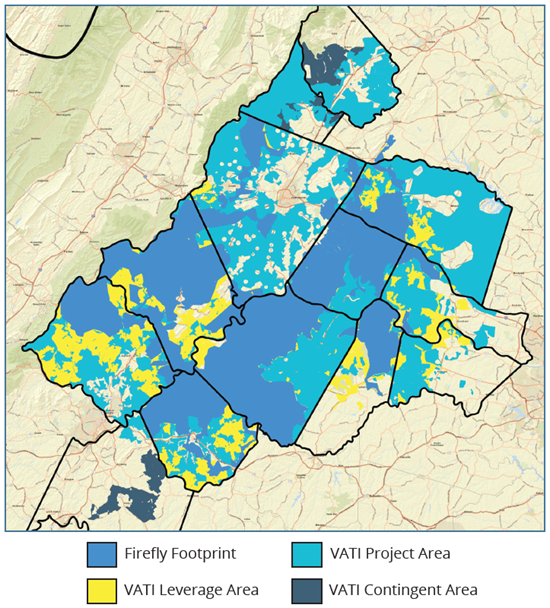
According to a cooperative announcement, the $12.2 million in Virginia Telecommunication Initiative (VATI) grant funding will be used to help fund a broader $48.6 million partnership with Rappahannock Electric Cooperative, Dominion Energy, and county governments.

These current VATI funds were largely made possible by federal COVID relief legislation passed in 2021. Such ARPA (American Rescue Plan Act) funding saw fewer overall restrictions and greater flexibility than infrastructure bill funding (BEAD) authorized the same year, resulting in states more quickly doling out funding for emerging broadband deployments.

“The fiber construction project will span approximately two years, covering 603 miles and reaching nearly 6,000 additional eligible locations in the counties of Amherst, Appomattox, Buckingham, Campbell, Fluvanna, Goochland, Greene, Louisa, Madison, and Powhatan,” CVEC said of the plan.

Image
CVEC Firefly RISE project map

CVEC and Firefly’s expansion into unserved Virginia comes after the cooperative first finished an ambitious, $130 million plan to install over 4,500 miles of fiber-optic cable across 14 counties, providing broadband internet access to all of its 39,000 members.

Small ISPs And Munis Top Consumer Reports Ranking While Altice, Comcast Fare Poorly

Consumer Reports’ latest survey of the most popular ISPs in America is once again dominated by smaller providers and community-owned and operated broadband networks.

The magazine’s semi-paywalled report measured the opinions of 48,000 readers on a 100 point scale across four criteria: value for money, connection reliability, customer service, and speed.

The top ranked (95 points) ISP in the nation according to Consumer Reports was Greenlight, a small fiber operator that deploys largely around upstate New York. The second (92) was EPB, the community-owned fiber network in Chattanooga, Tennessee whose deployment has helped the city envision an estimated $2.69 billion return on its initial investment.

Image
EPB laying fiber

At the same time, regional monopolies that benefit from muted competition and oversight continued to fare poorly in the magazine’s rankings.

Expensive and usage-capped satellite broadband services fared the worst (HughesNet (14) and Viasat (14)), followed by a peppering of regional cable and telco monopolies like Comcast Xfinity (28), CenturyLink/Lumen (25), Mediacom’s Xtream (25), or Altice’s Optimum (20).

USF Reform and the Start of the Big Fiber Rollup | Episode 99 of the Connect This! Show

Connect This

Join us Wednesday, July 31st at 3pm ET for the latest episode of the Connect This! Show. Co-hosts Christopher Mitchell and Travis Carter will be joined by regular guests Kim McKinley (UTOPIA Fiber) and Doug Dawson (CCG Consulting) along with special guest Case Lide (Keller and Heckman) to talk about T-Mobile buying Metronet, USF being cancelled by the Fifth Circuit, free municipal fiber in North Kansas City, Charter and Comcast losing more subscribers, and more.

Email us at broadband@communitynets.org with feedback and ideas for the show.

Subscribe to the show using this feed or find it on the Connect This! page, and watch on LinkedIn, on YouTube Live, on Facebook live, or below.

Remote video URL

Ting Brings Competition, Fiber Service and Microtrenching to Centennial, Colorado

The City of Centennial, Colorado is making steady inroads bringing affordable fiber Internet service to the city of 106,000, leveraging its city-owned fiber backbone and a partnership with the Charlottesville, VA.-based fiber provider Ting.

Just south of Denver – in a city known for its high-tech industry, craft breweries, and family-friendly neighborhoods – voter-approved efforts to get out from under the thumb of regional monopolies has driven a surge of competition, most recently exemplified by Ting’s continued delivery of affordable gigabit fiber.

Ting Public Affairs manager Deb Walker told ISLR that while the company couldn’t break out specific details on the number of passed fiber locations in the Centennial market, they’re making inroads on fiber deployments across Colorado.

“Now that Ting has city-wide networks built or under construction in three markets in the Denver region (Centennial, Greenwood Village and Thornton), and they share certain operational resources, we report progress on those markets together in our quarterly Ting Build Scorecard,” Walker said.

Image
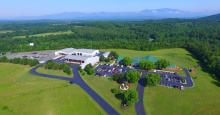
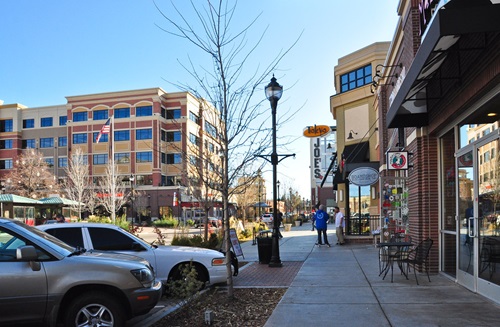
Streets at SouthGlenn in Centennial Co

“At the end of the first quarter of 2024, we had almost 31,000 serviceable addresses in the region, mostly in Centennial as we’re just starting the other two markets,” she added.

In 2021 Ting also unveiled the construction of a new 16,000 square foot office complex and data center, Walker said. Ting is also collaborating with Colorado Springs Utilities, which is building a fiber network throughout the city and connecting local homes and businesses.

Massachusetts’ Gap Networks Program Awards Verizon $37 million; One Muni Network Gets $750K

State broadband officials in Massachusetts have announced over $45 million in grant awards from the state’s Broadband Infrastructure Gap Networks Program with the lion’s share going to Verizon to “expand high-speed broadband [I]nternet infrastructure to underserved homes, business, and community anchor institutions across the state.”

State broadband officials say the $45.4 million in grant awards will be coupled with $40 million in matching funds from the awardees to expand broadband access to approximately 2,000 locations in 41 Massachusetts communities.

In 2022, as we previously reported here, Massachusetts was allocated a total of $145 million in federal Rescue Plan dollars to fund the Bay State program. With the state’s first round of funding from the Gap Networks Program awarding $45 million to four applicants, about $100 million is left in the pot for future funding rounds. Massachusetts has yet to receive its $147 million share of federal BEAD funds from the bipartisan infrastructure law, the spending rules for which are much more stringent than the more flexible CPF funding rules.

San Francisco Wins National Award For Providing Free High Speed Internet Service To Affordable Housing Residents

As the Affordable Connectivity Program (ACP) is now bankrupt and no longer helping low-income households pay for home Internet service, the City of San Francisco is being honored with the 2024 Community Broadband Project of the Year Award by the National Association of Telecommunications Officers and Advisors (NATOA) for its Fiber to Housing (FTH) program.

Built on the back of the city’s municipally-owned fiber optic network – which since 2002 has been used to connect city and public safety facilities, hospitals, libraries and street lights – California’s fourth most populous city is well on its way to extending the city-owned network to deliver free high-speed Internet service to 30,000 affordable housing units across the city.

Image
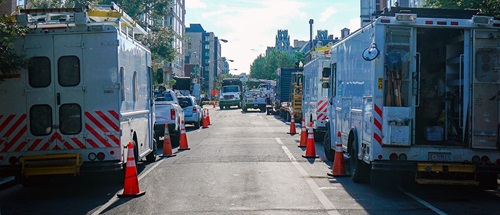
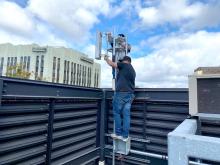
San Francisco technicians deploying fiber across roof

The program currently serves over 14,300 affordable housing units in the city, as well as 1,500 beds at homeless shelters across 115 sites, city officials say. An additional 10,000 residential units are expected to be connected in the coming fiscal year, with the aim of serving 30,000 units by July 2025.

According to the city’s website, the program has connected 52 public housing locations across the city to “fiber-optic and Ethernet cabling in every housing unit.” An additional 63 housing locations are getting free Internet through onsite Wi-Fi with download speeds ranging from 60 to 120 Mbps (Megabits per second), which exceeds the 50 Mbps service Comcast’s Internet Essentials offers.

Wilbraham, Massachusetts Takes First Step Toward City-Owned Fiber Build

Wilbraham, Massachusetts officials are taking the first steps toward building a city-owned open access fiber network with an eye on boosting local competition and delivering affordable, next-gen broadband access to long-neglected local residents.

Having issued a request for proposal (RFP) earlier this year with the help of EntryPoint Networks, city officials are currently identifying which company they’ll hire to deploy fiber to the city of 14,749.

They say a formal plan to present to voters – as well as a total projected network cost estimate – is expected by October.

“We have no intention of raising taxes or utilizing tax dollars,” Wilbraham Broadband Advisory Committee Chair Tom Newton tells local news outlet The Reminder.

Newton says Wilbraham is hopeful the new network will be primarily financed through an enterprise fund, similar to how the town handles the cost of water and sewer. Depending on take rates, the city is also hopeful the network will be sustainable primarily through subscriber fees. How that all works out in practice remains to be seen.

Image
Map of Wilbraham

Officials are hopeful to keep the total price per household around $60 a month. A project FAQ states the city wants to deliver symmetrical 20 Mbps (megabit per second), 100 Mbps, 250 Mbps, 500 Mbps, and symmetrical 1 Gbps (gigabit per second) service tiers to residents.

Net Neutrality Is Really A Debate Over Monopoly Power

With a 3-2 vote along partisan lines, the FCC has restored both net neutrality–and its Title II authority over Internet access providers. It’s just the latest chapter in a multi-decade quest to try and prevent national telecom monopolies from abusing their market power to undermine competitors while nickel and diming American consumers.

“Consumers have made clear to us they do not want their broadband provider cutting sweetheart deals, with fast lanes for some services and slow lanes for others,” FCC boss Jessica Rosenwocel said in a statement.

“They do not want their providers engaging in blocking, throttling, and paid prioritization. And if they have problems they expect the Nation’s expert authority on communications to be able to respond,” Rosenwocel added.

Smaller ISPs and municipalities worry that the new rules saddle them with burdensome regulations as a punishment for the sins of much larger companies. But the FCC, state leaders, and consumer groups insist the rules should be a net benefit all the same.

The final rules require that ISPs be transparent about any restrictions on consumer broadband lines. They also prohibit ISPs from extorting content and service companies looking to maintain high-quality performance on telecom networks, and prohibit telecoms from undermining online competition by creating pay-to-play “fast lanes.”

Pennsylvania Snubs Community Broadband, Small ISPs In Latest Broadband Grant Round

Telecom monopolies have hoovered up the lion’s share of $214 million recently doled out by the Pennsylvania state Broadband Infrastructure Program (BIP), with cooperatives, smaller ISPs, and community-owned networks left largely out in the cold.

It’s not a surprising move for a state long considered politically hostile to community-owned and operated broadband networks, though industry experts say this latest round of awards was particularly egregious when it comes to dodgy politics and its total lack of any real transparency.

According to an announcement by the Pennsylvania Broadband Development Authority (PBDA), this $204 million in Broadband Infrastructure Program (BIP) grant awards will help fund 53 projects in 42 counties across Pennsylvania, connecting 40,000 homes and businesses, bringing high-speed Internet to over 100,000 Pennsylvanians.

Image
PA Broadband Development Authority logo

The awards were funded with the state’s Capital Projects Fund allocation. After matching funds by winning bidders are included, the total broadband investment is expected to exceed $407 million. A complete breakdown of all grant award winners can be found here.

Verizon was the biggest grant award winner, nabbing $78.3 million. Other big grant award winners were Comcast ($61.7 million), Windstream ($12 million) Frontier ($3.5 million) and Brightspeed ($782,000). A few small private ISPs also won awards including Adams Cable ($387,969) Upward Broadband ($1,476,288) and Alleghenies Broadband ($1,809,524).