
CPUC

Content tagged with "CPUC"

Related Topics
Displaying 1 - 10 of 29

Fresno, California Celebrates Launch of Free Internet Initiative on Back of Community-Owned Network

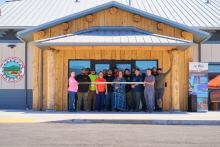
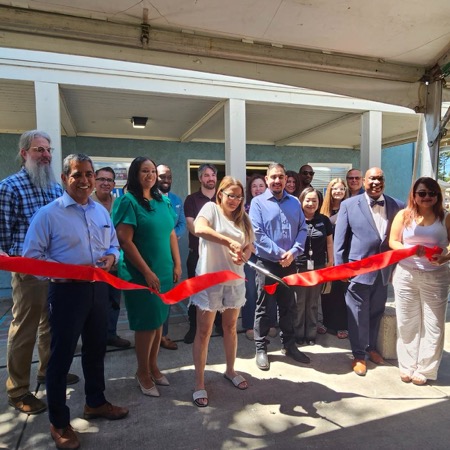
California community leaders, activists, and a coalition of partners gathered earlier this month to celebrate the launch of a new broadband infrastructure project at Sequoia Courts and Sequoia Courts Terrace in Fresno, bringing free high-speed Internet access to more than 350 residents.

The plan to bring broadband access to residents at no cost was made possible through a partnership with Fresno Housing, Fresno Coalition for Digital Inclusion (FCDI), United Way Fresno & Madera Counties, and Central Valley Community Foundation (CVCF). The Fresno Housing Authority will own and maintain the finished network.

The expansion, which leverages a hybrid fiber-wireless approach, was directly funded by California’s ambitious Broadband For All initiative, a $6 billion effort aimed at dramatically boosting broadband competition and access across the Golden State. Much of that effort was funded, in part, by the 2021 American Rescue Plan Act (ARPA).

Image
A group of community leaders and housing resident cut red ribbon in front of building

The Fresno grant was for $471,000, with $1,000 or less per unit cost to build, according to details on the project included in a California Public Utilities Commission (CPUC) filing, which notes that the enterprise-grade wireless mesh network used in the project was more costly, but provided “flexibility and scalability for future expansion.”

A California Democrat Is Trying to Gut the State’s Broadband Watchdog

Today, the American Prospect published an analysis – “A California Democrat Is Trying to Gut the State’s Broadband Watchdog” – authored by our own Sean Gonsalves that examines a recently filed bill in California which aims to “strip telecommunications oversight authority away from the California Public Utilities Commission (CPUC) and shift it to a more easily lobbied state legislature and a hypothetical state broadband office that doesn’t yet exist.”

The piece details how the CPUC has become a national model for broadband consumer protection, extracting landmark affordability commitments from the proposed Charter-Cox merger, launching a state-funded broadband subsidy program, and administering the only public loan fund in the nation dedicated exclusively to community-owned Internet networks.

Here's a few excerpts:

“Given what the CPUC has done over the past several years to ensure that every family in California can afford internet access, Boerner’s characterization of her poison pill is enough to make Orwell blush and MAGA operatives smile.”

“To understand what’s really at stake in Boerner’s proposal, it helps to understand what the CPUC has built, mostly behind the scenes, and what would be lost.”

“On telecom issues, the CPUC is not just a passive regulator. In the words of Ernesto Falcon, branch manager of the Communications and Broadband Policy division of the agency’s Public Advocates Office, the CPUC is something closer to ‘a public defender in the regulatory space.’”

“The office employs 22 public servants—attorneys, researchers, and policy specialists—whose sole job is to advocate for California consumers in a regulatory arena dominated by monopoly telecom companies with virtually unlimited resources to influence lawmakers and set the agenda.”

California Assembly Member Moves to Strip CPUC Broadband Oversight, Undermine Affordability Efforts

In the last few years, the California Public Utilities Commission (CPUC) has been more intensely focused on ensuring that broadband in California is affordable. 

So it’s curious to see the California State Assembly vote 67-1 on May 18 to strip telecom oversight authority away from the CPUC and shift it to a more easily lobbied state legislature – and an as-yet-undefined state broadband office.

The effort still has a long road before it’s formalized.

Assembly Constitutional Amendment 9, authored by Assemblymember Tasha Boerner, D-Encinitas, now moves on to the California Senate, where it needs to secure a two-thirds vote before appearing on a statewide ballot before California voters.

Image
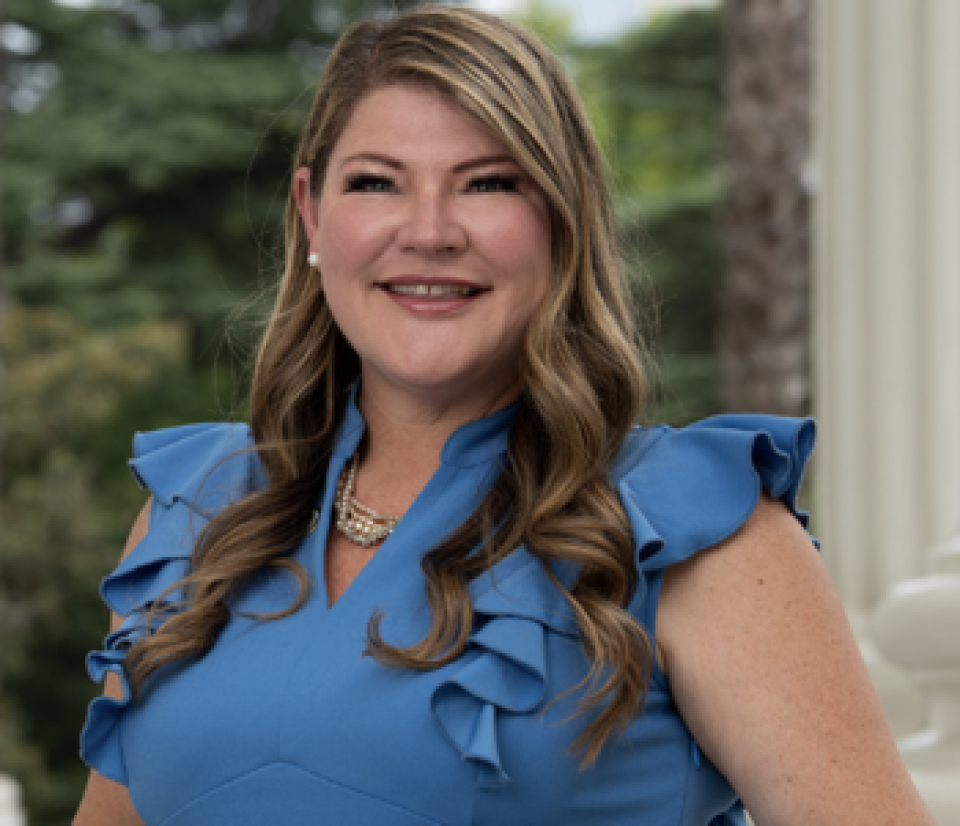
CA Assembly member Tasha Boerner smiles at camera wearing a light blue sleeveless dress with ruffles

The proposal would remove the state constitutional requirement to define and regulate telecommunications as a public utility, something long supported by telecom giants. Boerner’s amendment (and companion bill AB 2289) gives lawmakers leeway to strip the CPUC of its telecom portfolio and hand it over to a newly created state broadband office by 2028.

Consumer Advocates Are 'Shocked' and Skeptical 

Boerner’s proposal is being sold to state lawmakers and the local press as a way to keep the CPUC focused on soaring electrical costs.

California PUC Issues $3.29 Million In Digital Literacy Grants

As digital inclusion advocates across the nation push for the restoration of Digital Equity Act funding a year after President Trump unilaterally “terminated” the bipartisan Congressional law, the California Public Utilities Commission (CPUC) has approved $3.29 million in grants aimed at dramatically shoring up digital training and public broadband access in communities across the state.

All told, more than 18 new digital literacy projects and three expanded public broadband access projects will be funded, impacting more than 16,000 Californians.

According to the CPUC announcement, the projects, paid for from the California Advanced Services Fund (CASF) Broadband Adoption Account, will provide digital literacy training to 5,345 participants and deliver broadband access to 10,800 additional community members in underserved areas.

The funded CPUC projects run the gamut across all corners of the state, from $180,325 to provide digital literacy and data skills training for veterans in Santa Barbara and Ventura counties, to $751,780 to help fund five different digital literacy projects assisting older Americans in Alameda County, Orange County, Riverside County, San Francisco, and San Jose.

Image
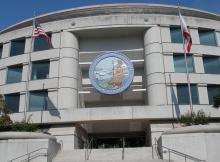
CPUC office building with state seal above doorway

The biggest grant, $1.19 million, will be used to help fund eight Golden Bridge Program digital literacy projects serving seniors, low-income residents, justice-involved youth, and high school students in the Sacramento region.

Mergers, Monopoly Prices, and Accountability - Episode 676 of the Community Broadband Bits Podcast

In this episode of the podcast, Chris is joined again by Doug Dawson and Sean Gonsalves for a fast-moving discussion of the latest developments reshaping the broadband landscape. 

The trio unpacks a wave of major telecom mergers, including AT&T’s acquisition of Lumen assets and Frontier’s consolidation, and what growing market power means for prices, competition, and consumers.

They dig into new research from Chattanooga showing the long-term economic and community benefits of municipal fiber, alongside a major California Public Utilities Commission study revealing how lack of competition drives higher broadband prices—especially for low-income households. 

Doug explains how ISPs increasingly use neighborhood-by-neighborhood pricing tactics, leaving long-time customers paying the most for the slowest speeds.

The conversation also revisits Starlink’s controversial demands to rewrite BEAD program rules, the uncertain future of non-deployment funds, and why satellite solutions continue to fall short of their promises. 

Rounding out the episode, the group explores emerging pressures from AI-driven bandwidth demands, consolidation in wholesale fiber markets, and troubling legal trends that raise questions about accountability, regulation, and consumer protections.

This show is 51 minutes long and can be played on this page or via Apple Podcasts or the tool of your choice using this feed

You can also check out the video version via YouTube.

Transcript below.

We want your feedback and suggestions for the show-please e-mail us or leave a comment below.

Listen to other episodes or view all episodes in our index. See other podcasts from the Institute for Local Self-Reliance.

Thanks to Arne Huseby for the music. The song is Warm Duck Shuffle and is licensed under a Creative Commons Attribution (3.0) license

A $20 Verizon Internet Deal on Paper – Will Depend Heavily on Enforcement

California’s Public Utilities Commission (CPUC) recently signed off on Verizon’s $20 billion merger with telecom giant Frontier with some notable conditions. As part of Verizon’s settlement with the CPUC, they’re being required to offer affordable broadband, improve network resilience, and expand fiber and cellular access into long-neglected portions of the Golden State.

According to the CPUC approval announcement, the agency voted 5-0 to approve the merger after months of deliberation and negotiation with Verizon.

One cornerstone of the CPUC’s agreement is that Verizon will be required to offer significant support for its "Verizon Forward" service, which offers home Internet access for as low as $20 a month (either 300 megabit per second (Mbps) symmetrical fiber or 100/20 Mbps wireless) to California homes that qualify for existing low-income assistance programs.
 
Under that part of the arrangement, Verizon pledges to maintain that $20 per month price point for the next decade.

Verizon’s Frontier Deal Comes With Strings Attached

This comes on the heels of a recent CPUC study that found “the average monthly price for a plan at or above 100 megabits per second (Mbps) download and 20 Mbps upload – the Federal Communications Commission’s benchmark for broadband speeds – is $116.68” – “far above what many households can afford.” The study further indicates that in large swaths of the state “low-income households spend more than 15% of their discretionary income on broadband service.”

Gateway Cities Fiber Project Rolls On, Aims To Revolutionize California Broadband

Two dozen California cities are making progress bringing affordable fiber to 16,500 new locations in the Golden State. The collaborative middle mile project, dubbed the Gateway Cities Council of Governments' (GCCOG) Gateway Cities Fiber Optic Network Project, could revolutionize connectivity for a broad swath of Californians long stuck on the wrong side of the digital divide.

While the project should be transformative, questions remain if the project will reach the full potential of its original 2021 vision after some significant revisions were made to California’s expansion plans in the summer of 2023.  

The $104 million broadband infrastructure project is leveraging money from the California Department of Technology’s Middle Mile Broadband Initiative and the California Public Utilities Commission’s Last Mile Federal Funding Account Grant Program (FFA).

Both are part of a broader $6 billion California “Broadband For All” initiative aimed at boosting broadband competition and driving down broadband access costs statewide. The initiative in turn was enabled by 2021 federal infrastructure and COVID relief legislation resulting in a generational flood of historic broadband subsidies.

All told, the $104 million Gateway Cities Fiber Optic Network Project aims to connect 24 cities, 4,254 unserved locations, and as many as 16,500 locations with 74 miles of next-generation gigabit-capable fiber. The network will also bring faster fiber connectivity to 72 anchor institutions and public safety entities scattered across Southeast California.

Antelope Valley, California Eyes $24 Million Fiber Expansion

Antelope Valley, California officials are hoping to leverage California’s historic recent round of broadband grant programs to deliver affordable fiber access to a significant swath of long-underserved southern California desert communities.

According to Antelope Valley officials, they’ve applied for a $24.3 million California Advanced Services Fund (CASF) Broadband Infrastructure grant to help them deliver symmetrical 10 Gigabit Passive Optical Network (XGS-PON) technology to 988 total households, most of which would be seeing affordable fiber access for the first time ever.

A breakdown of the project included in the application submitted by the Antelope Valley Union High School District to the California Public Utilities Commission (CPUC), indicates that the proposed project seeks to connect to the California State Middle Mile route at two points currently being negotiated in collaboration with state Middle Mile Authorities.

“The award will not be determined until approximately quarter two of next year,” Antelope Valley Union High School District Superintendent Greg Nehen tells ILSR.

Image
Antelope Valley fiber project map

The Antelope Valley Broadband Project would be constructed with 100 percent underground fiber installation, with all fiber-optic cables placed in buried conduit within public rights-of-way, using underground microducts, handholes, and splice enclosures. No aerial deployment is planned for this project, according to project leaders.

California Regulators To Include Broadband Affordability Requirements In Verizon Frontier Merger Approval

The California Public Utilities Commission (CPUC) is poised to include new broadband affordability requirements as part of the state’s looming approval of Verizon’s massive $20 billion merger with Frontier Communications, even as some consumer advocacy groups worry the changes may not go quite far enough to hold Verizon accountable.

The CPUC’s Public Advocates Office has struck a partial settlement with Verizon that the state hopes will take some of the sting out of the telecom industry’s latest consolidation spree.

Verizon’s $20 billion proposed merger with Frontier would merge two of the nation’s top four traditional phone companies, resulting in a telecom giant with assets across 31 states. The merged new company would have more than 9.6 million customers with a fiber network that ultimately passes more than 25 million fiber homes and businesses.

While the two companies don’t directly compete, Verizon’s political influence and market power will still increase. Both companies have long been criticized for lobbying to undermine U.S. broadband competition, then leveraging the resulting regional market failure to jack up consumer costs and neglecting aging DSL network upgrades and repairs.

Sonoma County, CA To Offer Free Broadband To Low-Income Residents

In the wake of a federal abandonment of most meaningful Internet equality efforts, California municipalities continue to take the fight for equitable broadband access into their own hands. 

That includes Sonoma County, California, where county officials have freshly greenlit expanded plans to provide free broadband access to low income residents.

Image
Map of California that shows Sonoma County on Northern California's coastline

Target: Affordable Housing

The Sonoma County Board of Supervisors recently announced that it has approved a list of new affordable housing sites that are eligible to receive free Internet for one year.

According to the county, 556 low-income Sonoma County households across 10 different housing locations should qualify for the free broadband service.

The deployments are being made possible by the 2021 American Rescue Plan Act (ARPA), which continues to result in some fairly transformative fiber deployments countrywide.

“The Board has prioritized finding creative solutions to broadband infrastructure development in Sonoma County,” Board of Supervisors Chair Lynda Hopkins says of the effort.

“This free internet program is a step toward equity as we continue to pursue public funding and strategic partnerships that can finally close the digital divide facing many of our shared communities.”