
financing

Content tagged with "financing"

Related Topics
Displaying 1 - 10 of 475

Done Waiting: Upcoming Webinar to Showcase Alternative Way Communities Are Building Their Own Fiber Networks

For years, the conventional playbook for communities stuck with slow, expensive Internet service has been to wait. Wait for the incumbent cable or phone company to upgrade connections, wait for a federal grant, wait for someone else to solve the problem. 

Now, a growing number of communities have decided they are done waiting.

And on July 7 at 12 noon ET, the latest installment in a joint webinar series from the American Association for Public Broadband (AAPB) and the Institute for Local Self-Reliance (ILSR) will showcase a new financing model being put into action that allows for communities to control their digital futures.

The free, one-hour live webinar to be broadcast on ILSR's YouTube channel — "Control + Shift + ALTernative: Building Community-Owned Fiber" — will go behind the scenes of two real-world community fiber projects to tease out the practical lessons that other communities can learn from.

Registration for the webinar is now open here.

The webinar will be moderated by Gigi Sohn, one of the country's foremost telecommunications policy experts and head of AAPB, and Sean Gonsalves, Senior Writer and Associate Director for Communications with ILSR's Community Broadband Networks Initiative.

Together they will lead a conversation with four practitioners who have been in the trenches of community broadband development: Jim Cannon, CEO of Pivot-Tech; Scott Corbitt, General Manager of the Port of Lewiston; Christina Burns, Kendall County Administrator; and Chris Perlitz, Managing Director at Municipal Capital Markets Group, Inc.

ILSR Launches Latest Tribal Internet Networks Census Update

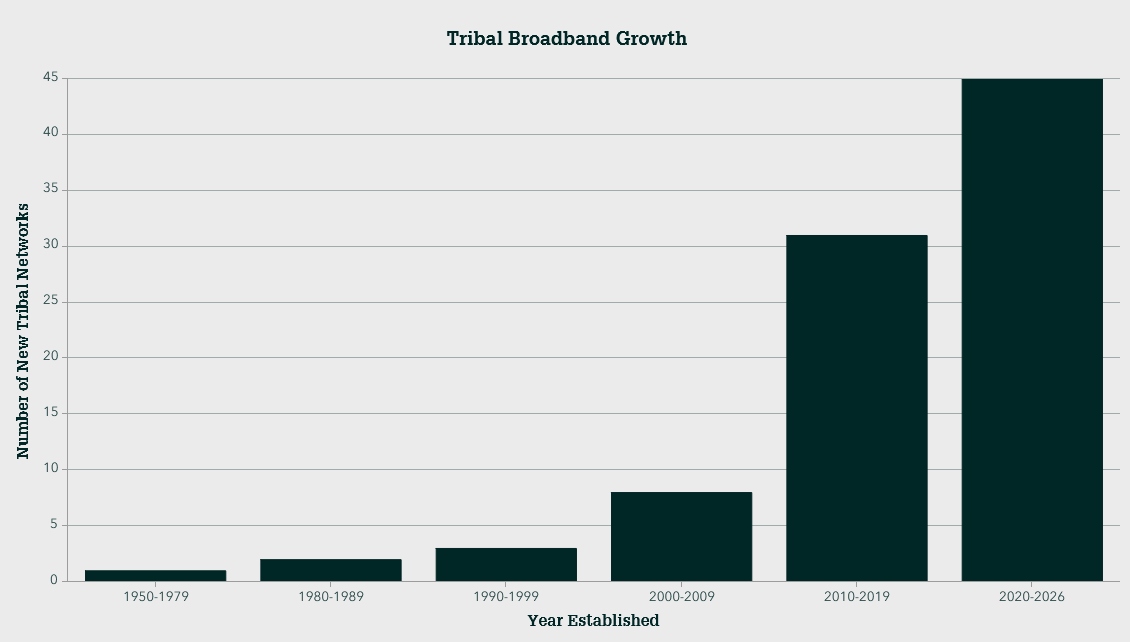
The Institute for Local Self-Reliance today released its comprehensive 2026 census of Tribal Internet networks, finding that the number of active Tribal-owned and operated broadband networks has doubled since ILSR first conducted this research in 2020 while offering a new way to interact with these networks’ stories.

Across the country, nearly 90 Tribal nations are actively providing Internet access to their communities. These Tribes own the wires or the wireless equipment that guarantee community members can stay connected to loved ones, continue their education remotely, check in with their doctors without driving an hour each way, and stay engaged in the social civic life of their communities.

This number underscores a period of massive growth in the last ten years among Tribal broadband owners. 

Image
Tribal Network Growth

Nor is that growth over. Our research also located about 50 Tribal nations that are building or have received funding to build networks, and another few dozen that have expressed interest in bringing Internet access to their communities. Over the next decade, the ranks of Tribal broadband owners may well double again.
 

Fort Bragg Fiber Deployment Sees Delays, Higher Costs

Fledging efforts to build a fiber network in Fort Bragg, California have seen some headwinds in the wake of the project’s original build partner being dismissed. The need to find a new vendor to help the city toward its goal has resulted in significantly higher costs and some notable delays, though city leaders say they’re still dedicated to guiding the project to completion.

The original plan to deploy affordable fiber broadband to the city of 7,000 was slated to cost somewhere around $14.7 million. When the city announced its plan to begin construction last year, that number jumped to $17.3 million. Recently issues have now increased the planned total cost for the project to $18.9 million.

Construction began last Spring, but it didn’t take long for the city to realize that the fiber deployment was going to exceed the city’s original projections.

“In July or June, it became obvious that the level of restoration in the streets was going to far exceed what we could afford,” City Economic Development Manager Sarah McCormick told the Fort Bragg City Council at a meeting back in January.

At the same time, the city's original build partner, construction management firm GHD, was dismissed by the city after it could not originally account for being over budget due to boring costs. GHD had been awarded a $1.4 million contract to oversee the project.

“We quickly terminated that part of the contract because that was his job — to track the project,” McCormick said.

Analysis later found that the higher costs were due to the late addition of telecom fiber flower pots – enclosures allowing for the core fiber trunk to be split off to serve individual locations and residences – something inexplicably omitted from the original design.

“When they made that change, they didn’t change the bill of materials for boring,” McCormick said. “That would have been like a real no-brainer thing to see if you were the construction manager and tracking the project.”

Navigating a New Path

Who Benefits from this Bargain? | Episode 118 of the Connect This! Show

Connect This! Show

Catch the latest episode of the Connect This! Show, with co-hosts Christopher Mitchell (ILSR) and Travis Carter (USI Fiber) joined by regular guests Kim McKinley (TAK Broadband) and Doug Dawson (CCG Consulting) and special guest Heather Mills (Tilson) to talk about the FCC giving out participation trophies to the monopoly providers, how state offices are responding to the BEAD guidance changes, disaster response and resilient Internet networks, and more. The full list of topics includes:

Join us live on July 24th at 2pm ET, or listen afterwards wherever you get your podcasts.

Email us at broadband@communitynets.org with feedback and ideas for the show.

Subscribe to the show using this feed or find it on the Connect This! page, and watch on LinkedIn, on YouTube Live, on Facebook live, or below.

Capital is Power: Financing Broadband for the Long Haul - Episode 654 of the Community Broadband Bits Podcast

In this episode of the podcast, Chris talks with Brian Vo (Connect Humanity) and Clara Miller (Federal Reserve Bank of New York) about unlocking mission-driven capital to bring broadband to historically excluded communities.

They explore how broadband networks, like other public utilities, can be funded through creative partnerships and financial tools that align with long-term community goals.

From the early lessons of the CDFI movement to success stories like Macon County, Alabama, this conversation highlights how inclusive, community-centered financing can build sustainable Internet infrastructure for the future.

This show is 30 minutes long and can be played on this page or via Apple Podcasts or the tool of your choice using this feed.

Transcript below.

We want your feedback and suggestions for the show-please e-mail us or leave a comment below.

Listen to other episodes or view all episodes in our index. See other podcasts from the Institute for Local Self-Reliance.

Thanks to Arne Huseby for the music. The song is Warm Duck Shuffle and is licensed under a Creative Commons Attribution (3.0) license

Experts Point To The Big ‘Payback’ That Flows From Municipal Broadband Investments

At the “Municipal Broadband and Innovative Financing Models: Unlocking Economic Growth” webinar earlier today, attendees got an inside look at how successful community broadband networks have been funded – and how cities and towns can still finance networks even with the uncertainty now swirling around the federal BEAD program.

Co-hosted by ILSR’s Community Broadband Networks Initiative and the American Association for Public Broadband (AAPB), the webinar featured a wealth of municipal broadband financing knowledge from four guests with deep experience navigating the numbers.

Co-host Gigi Sohn, who was joined by ILSR’s Sean Gonsalves, began the webinar with a brief explanation on why AAPB and ILSR are joining forces for what will be a series of webinars designed to assist cities and towns in how local and state leaders can deal with solving local connectivity challenges where the big incumbent ISPs have failed to deliver ubiquitous and reliable service.

Image
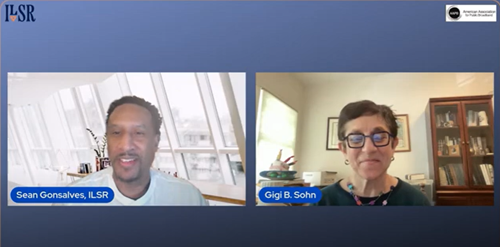
Screenshot of Sean Gonsalves and Gigi Sohn during webinar

“I've been traveling around the country and I hear from a lot of communities who are very interested in a model where they control their broadband networks in their communities,” she said. “We want to kind of demystify the finance part and try to get communities more comfortable with how they can move forward.”

The first guest expert to take center screen was Ernie Staten, the City of Fairlawn, Ohio’s Public Service Department Director.

The Potential of Fiber: Smart Cities, BEAD, and Municipal Broadband Financing - Episode 636 of the Community Broadband Bits Podcast

In this episode of the podcast, Chris and Sean dive into the latest developments in broadband policy and fiber technology. They discuss California’s investment in tribal broadband, the exciting capabilities of fiber optic sensing for smart cities, and the ongoing debate around BEAD funding and fiber prioritization. 

The conversation highlights how fiber can revolutionize municipal infrastructure by detecting traffic, preventing water leaks, and improving urban planning.  

They also preview an upcoming webinar co-hosted by Sean and Gigi Sohn of the American Association for Public Broadband, focused on financing municipal broadband projects. 

Featuring insights from industry experts, the webinar aims to help local governments navigate funding options for community-owned networks.  

Tune in for a thought-provoking discussion on broadband’s future, policy challenges, and the innovative potential of fiber infrastructure. 

This show is 27 minutes long and can be played on this page or via Apple Podcasts or the tool of your choice using this feed.

Transcript below.

We want your feedback and suggestions for the show-please e-mail us or leave a comment below.

Listen to other episodes or view all episodes in our index. See other podcasts from the Institute for Local Self-Reliance.

Thanks to Arne Huseby for the music. The song is Warm Duck Shuffle and is licensed under a Creative Commons Attribution (3.0) license

AAPB and ILSR to Host Webinar on the Financing Fundamentals of Community Networks

The American Association for Public Broadband (AAPB) and ILSR’s Community Broadband Networks Initiative are teaming up to host a webinar later this month for local and community leaders interested – or on the fence – in pursuing municipal broadband solutions to local connectivity challenges.

Municipal Broadband and Innovative Financing Models: Unlocking Economic Growth” will focus on ways publicly-owned broadband networks can be financed and feature municipal broadband providers and financing experts who have successfully navigated the maze of municipal finance.

The free webinar is slated for February 20, 2025, from noon to 1 pm ET.

Image
Flyer for webinar announcing title, date and time

Registration is open now here.

Co-hosted by AAPB Executive Director Gigi Sohn and Sean Gonsalves from ILSR's Community Broadband Networks Initiative, organizers are encouraging attendees to bring their questions, as the agenda aims to foster information-sharing and actionable insight.

Panelists for the discussion will be:

  • Ernie Staten, City of Fairlawn’s Public Service Department Director
  • F.X. Flinn, ECFiber Governing Board Chair
  • Laura Lewis, Principal and Co-Owner of LRB Public Finance Advisors
  • Eric Rex, Vice President at KeyBanc Capital Markets

“There are more than 400 publicly-owned broadband networks operating right now across the nation,” said AAPB Executive Director Gigi Sohn. “That number has been growing rapidly. But, there's more work to do to address the fear and hesitation that’s stopping some communities from pursuing the public model.”

Planning is Good, but Pivoting is Better in Fort Collins, Colorado - Episode 588 of the Community Broadband Bits Podcast

This week on the podcast, Christopher is joined by Chad Crager, Broadband Executive Director at City of Fort Collins, to talk about the rapidly maturing city-owned network they call Connexion. From a feasibility study in 2018 to the lion's share of construction completed today, Connexion's story illustrates the value of being nimble when expectations meet reality. When planned use of existing conduit was thwarted by frozen and root-blocked pathways, the city bored new routes. When that led to increased construction costs, the city adjusted its target take rate upwards and hired dedicated, community-minded staff eager to be responsive to subscribers and build a sense of goodwill. And when developers argued they only needed a single fiber to run wireless for new apartment complexes, the city convinced them to plan for more growth in the future.

Along the way, the municipal network has committed to doing its part in the fight for digital equity. This includes the establishment of a fund with 6 percent of network revenues going to support low-cost plans and literacy efforts, to partnering with Larimer County on extending the network outside city limits, and more.

This show is 38 minutes long and can be played on this page or using the podcast app of your choice with this feed.

Transcript below.

We want your feedback and suggestions for the show: please e-mail us or leave a comment below.

Listen to other episodes here or see other podcasts from the Institute for Local Self-Reliance here.

Thanks to Arne Huseby for the music. The song is Warm Duck Shuffle and is licensed under a Creative Commons Attribution (3.0) license.

Wolves in Sheep's Clothing, Trojan Horse Networks, and Flowering BUDs - Episode 561 of the Community Broadband Bits Podcast

This week on the podcast, Christopher is joined by Associate Director for Communications Sean Gonsalves to check in on the move towards a citywide open access fiber-to-the-home (ftth) network in Bountiful, Utah, an expanding institutional network in Fairhaven, Massachusetts, and widespread support among small Maine towns that public dollars should go to publicly owned networks.

Along the way, they chat about the astroturf misinformation campaign being run by the Utah Taxpayer's Association, how a city negotiated a capital fee it's using to build its own network and get out from under Comcast's thumb, and the growing momentum behind Maine's Broadband Utility Districts (BUD) and their quest to improve competition and Internet access for residents.

This show is 38 minutes long and can be played on this page or via Apple Podcasts or the tool of your choice using this feed

Transcript below.

We want your feedback and suggestions for the show-please e-mail us or leave a comment below.

Listen to other episodes here or view all episodes in our index. See other podcasts from the Institute for Local Self-Reliance here.

Thanks to Arne Huseby for the music. The song is Warm Duck Shuffle and is licensed under a Creative Commons Attribution (3.0) license.