
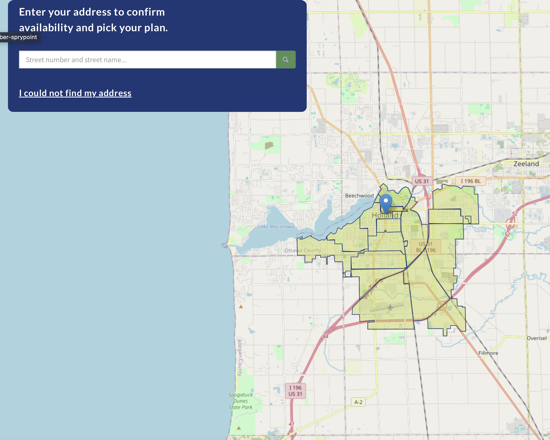
After more than a decade of grassroots study, public debate, and pushback from legacy telecom incumbents, the City of Holland, Michigan is officially lighting up its open access citywide fiber network.
Operated by the municipal electric utility, the Holland Board of Public Works’ (HBPW) publicly owned, open-access network — dubbed Holland City Fiber — has transitioned from network construction to lighting up its first subscribers.
The milestone marks a major victory for local digital self-reliance in western Michigan, delivering symmetrical multi-gigabit speeds at prices commercial monopolies like Comcast have historically refused to match.
An Investment For ‘Future History Books’
Home to about 34,000 residents, Holland’s path to municipal fiber was more than a decade in the making.
HBPW had maintained a small institutional and business fiber loop dating back to 1992. But like countless mid-sized cities across the Midwest, local residents and small businesses outside the immediate downtown core were left at the mercy of a cable-and-phone duopoly that chronically underinvested in network upgrades while hiking rates via hidden junk fees.
Formal exploration of a citywide build began around 2016. In 2021, the city tapped engineering consultancy CTC Technology & Energy to conduct a feasibility study and business plan. That study laid bare what locals already knew: leaving the city’s connectivity to the private market would ensure decades of stagnant speeds, erratic customer service, and escalating costs.
The breakthrough came on August 2, 2022, when Holland voters went to the ballot box to decide their broadband future. Despite an influx of scaremongering from monopoly-backed opposition groups warning about financial catastrophe and tech obsolescence, voters approved a dedicated broadband bond referendum by a decisive margin.
Locals now have the option of two tiers of next-gen fiber service at speeds and pricing significantly better than anything offered by local private monopolies: a symmetrical 2 gigabit per second (Gbps) option for $45 a month; or a symmetrical 10 Gbps tier for $125 a month.
The network’s fiber tiers come with no usage caps, overage fees, hidden surcharges, or long-term contracts.
The prices and speeds are a specific and dramatic improvement over regional cable broadband monopoly Comcast, which spent an estimated $110,000 on mailers, radio ads, polling and consulting attempting to unsuccessfully undermine the project at the polls.
“This is a legacy investment,” Holland Mayor Nathan Bocks said of the network’s progress. “The most important thing about this project is it is not built just for the needs of today. We built it for the Holland our children and grandchildren will inherit.”
“When future history books are written, this decision, the decision to build a world class community owned and operated fiber broadband system will go down as one of the smartest and most impactful decisions the people of Holland have ever made.”
Funding A Local Revolution
Rather than relying purely on speculative subscriber revenue or waiting for bureaucratic federal grants, Holland crafted a hybrid financing model anchored by local vote support.
The August 2022 referendum authorized the city to levy up to 1.5 mills of property tax to support the capital debt for the buildout. When the city finalized its pro forma modeling and bond authorization, the city council set the levy lower than authorized—at 1.2 mills. For an average residential home in Holland with a taxable value around $100,000 (roughly a $200,000 market value), that translates to just $10 to $12.50 per month.
The network’s overall initial capital budget was structured around roughly $30 million. The city authorized $24 million in municipal bonds backstopped by the millage to fund citywide deployment. The millage treats the fiber passing each home as an essential civic asset — identical to how the community funds its local library, public parks, and water mains.
While Michigan state broadband offices have distributed federal capital via the ROBIN grant program and BEAD allocations, Holland’s primary build was deliberately engineered to move without waiting on state grant approvals, leveraging municipal credit and HBPW’s established operational balance sheet.
In 2023, the city completed its network design and awarded a $15.9 million contract to Omaha-based contractor eX² Technology to deploy the physical fiber plant across the city’s footprint. Construction broke ground in January of 2024, and is expected to be completed before the end of the year.
Holland’s success provides yet another clear template for municipalities throughout Michigan and across the country that are tired of begging incumbent providers for reliable, affordable infrastructure. By treating broadband as an essential community utility rather than a monopoly cash cow, the city has secured a future-proof network that keeps local subscriber dollars circulating inside the local economy for generations to come.
“The completion of this network is about much more than faster Internet speeds,” Pete Hoffswell, Superintendent of Broadband Services for Holland BPW, says of the milestone. “Access to great internet service gives our residents and businesses the freedom to work, learn and connect so they can thrive in whatever they choose to do, right here in Holland.”
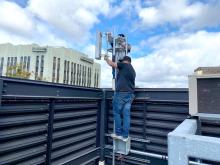
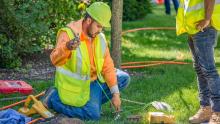
Header image of residential fiber installation courtesy of Holland BPW Facebook page
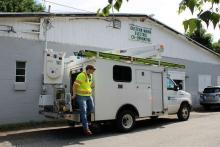
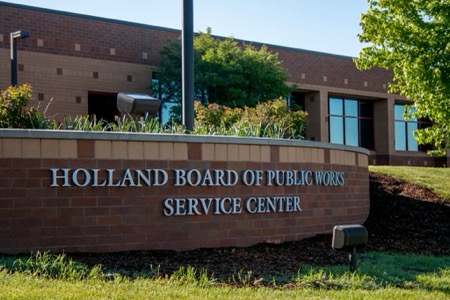
Inline image of Holland BPW service center courtesy of Holland BPW Facebook page