
The following stories have been tagged regulation ← Back to All Tags

Verizon Plans to Abandon Copper Wires In Islands Damaged by Sandy

Victims of Sandy are still recovering from the killer storm that ripped through the east coast last year. Two places hardest hit by the "Frankenstorm" were Fire Island, New York and the Barrier Island in New Jersey. In addition to homes and property, residents lost phone and Internet communications when telephone wires went down. They are still waiting to be reconnected.

Our readers know about the huge fight that has embroiled consumer advocates and the leading telephone providers in the past few years. AT&T and Verizon seek deregulation to escape the "carrier of last resort" obligation that requires maintenance of traditional copper lines for telephone service. AT&T and Verizon want to shed that responsibility in favor of wireless service that is less expensive to maintain, even though it does not support the range of uses today's copper networks do. 

Verizon is the incumbent telephone provider in Fire Island and Barrier Island but decided it will not repair damaged lines. It wants to instead deploy its inferior Voice Link wireless service on the island.

The Voice Link technology basically attaches to your house and uses Verizon's cellular network to connect the telephones in your home. Homeowners can continue to use their home phones, but the quality tends to be worse than on a proper wired telephone network. 

Under federal law,  telephone providers are obligated to replace or repair downed copper lines unless they substitute with a "line improvement," such as fiber-optic lines. Voice Link cannot be described as a "line improvement" - the only benefit it provides is that it costs Verizon less to build and maintain. 

Public Knowledge Logo

Jodie Griffin from Public Knowledge recently pointed out some of the many shortcomings of Voice Link, as revealed on Verizon's own Terms of Service. The people most harmed by this scaled back service include the people who, in one way or another, are most vulnerable. Harold Feld, also from Public Knowledge, addressed what he sees as the most critical changes and who those changes most affect:

1. Voice Link will not allow you to receive collect calls, use calling card minutes or other forms of cheap long-distance provider, and requires you to have a separate international plan to make international calls.

Who gets hurt most. Immigrant communities, anyone with a loved one incarcerated or who otherwise needs to make a collect call. Since Voice Link also does not support any data plan, anyone who used to subscribe to VZ DSL and depended on Skype or other VOIP product is equally out of luck. Again, given the tremendous use of Skype by immigrant communities to call relatives back in their country of origin, this hits them particularly hard.

 2. Voice Link will  not work with life alert systems or security alarm systems.

Who gets hurt. The elderly trying to maintain independence. Anyone with a burglar alarm or fire alarm system that does not have independent wireless connections.

 3. Voice Link will not work with DVRs or Fax machines.

Who gets hurt. Any consumer that owned this kind of equipment and stuck with Verizon because they wanted to keep using it.

 4. Voice Link will not work with credit card machines or other electronic payment processing.

Who gets hurt. Small businesses, especially when combined with losing their fax service to take orders by fax.

 5. 9-1-1 calls may fail due to congestion on network or for other reasons, including Verizon negligence in routing the call.

Who gets hurt.  Well, any of those elderly whose Life Alert no longer works, for a start.

Voice Link also cannot be used for Internet access, which whittles down an already short list of providers. 

FCC Logo

Verizon appeared to be circumventing the process until a June 7th request to the FCC. The telecom giant received permission from the New York Public Service Commission (NYPSC), and immediately began nurturing a plan to follow suit in other locations. Harold Feld, from Public Knowledge, wrote about Verizon's long term plans on his Tales of the Sausage Factory blog:

Since the NYPSC gave Verizon permission to deploy Voice Link instead of copper on Fire Island (at least on an interim basis), Verizon has moved full speed ahead to deploy Voice Link in other areas where Sandy destroyed the infrastructure, and is gearing up to deploy Voice Link in Florida to replace copper with Voice Link in something called “Project Thunder,” no doubt in anticipation of the active hurricane season predicted by the National Weather Service at NOAA.

Verizon's action is shifting U.S. communications policy without moving through the proper (however flawed) channels of the FCC, shifting the balance away from the public interest. If the FCC allows Verizon to move forward unilaterally, AT&T will certainly follow suit. In a later post, Feld wrote:

In some ways, this is a little thing impacting only a few communities. In other ways, it is a very big deal. If there is a single moment to point to and say “This is it! This is The Day We Started To Shut Down The Phone Network,” that day is today. With this little routine barely noticed filing for an administrative procedure that impacts a handful of communities.

While the FCC will ask for public comment on Verizon's application, we should contact them now to express our concern about this situation. The public deserves a policy and a process for replacement of old copper lines. That policy needs to include improved service - not a more limited communications mechanism - and needs to be in place now rather than during natural disaster recovery.

AT&T and ALEC Take Aim at Connecticut for Third Year in a Row

StopTheCap! reports there are three bills in the Connecticut General Assembly that, if passed, will leave little or no protections for customers of plain old telephone service who encounter difficulties with service. AT&T and ALEC back these bills for the third year in a row.

Such bills are not new to our readers who often see our reports on large corporate providers that use state legislators as vehicles to shed regulations. Phil Dampier from StopThe Cap! summarizes all three bills:

HB 6401: House Bill 6401 strips the Public Utilities Review Authority (PURA) of their ability to regulate Voice Over Internet Protocol (VoIP) telephone services. An emerging market, this bill creates deregulation for the sake of deregulation.

HB 6402: House Bill 6402 eliminates the right of regulators to oversee AT&T to make sure it has some form of accountability to the public. The section on annual audits has been gutted, making it impossible to protect the public from rate-fixing. More importantly, it includes a provision to allow AT&T to end service to any customer it wants upon 30 days’ written notice. [PDF of the Nonpartisan Bill Summary available from the Connecticut General Assembly]

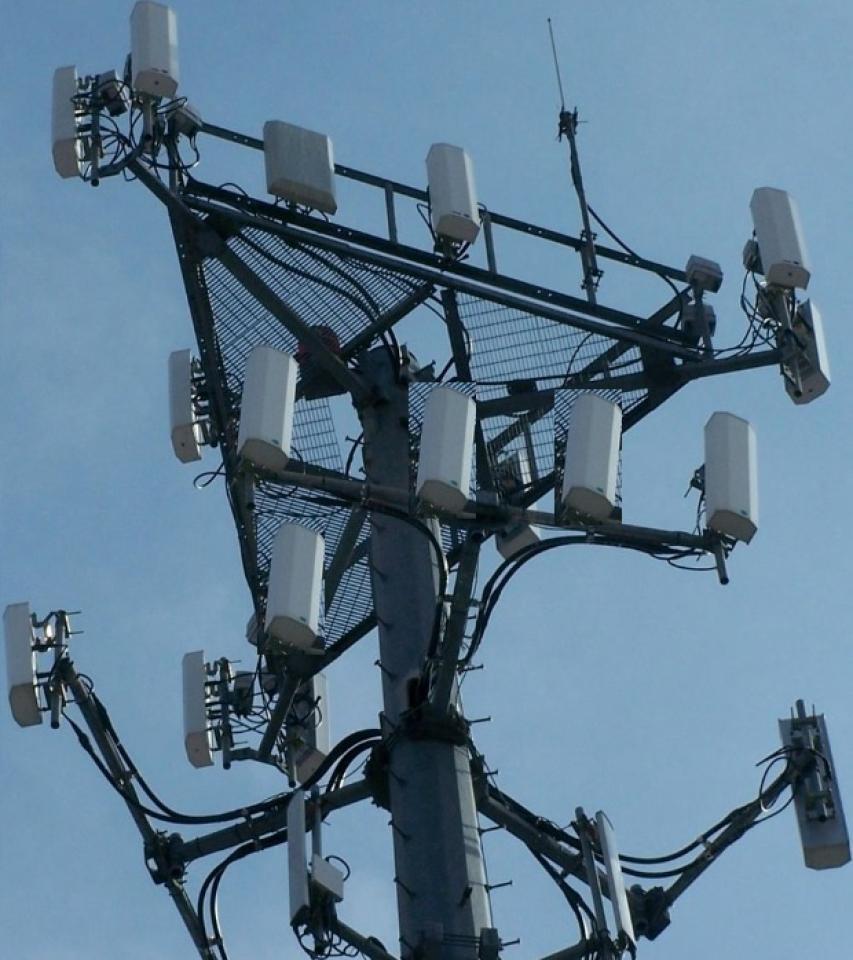
SB 888: Senate Bill 888 has an ALEC-drafted provision that allows cell phone towers to be built on public lands on a presumption that the will of telecommunications companies is in the interest of the public good.

As we saw in Kentucky, concerned citizen groups will not take the change lying down, joining forces to form the Don't Hang Up on Connecticut coalition. AARP Connecticut leads the charge to motivate seniors and their families, a group traditionally dependent on landlines. George Gombossy, from the New Britain Herald, spoke with John Erlingheauser, AARP's advocacy director:

Erlingheuser said his organization is particularly concerned with three elements of the proposal: Allowing AT&T to stop providing any of its services with a 60-day notice to the Public Utilities Regulatory Authority.

Limiting the state’s quality of services standards “which cover such things as responding to trouble reports and service outages.” And a halt to annual audit of AT&T’s business in Connecticut in which the company reports on its investments in infrastructure and modernization.

The three, he said, will result in AT&T spending less on traditional phone system and more on its cellular and Internet-based systems.

Connecticut Seal

The list of supporting legislators and AT&T lobbyists includes ALEC chairs on both the federal and state level.

The New Haven Register also reported on the measure:

“If AT&T is allowed to drop service in unprofitable areas at their sole discretion, if they’re allowed to let service outages drag on for weeks with no consequences, if they’re allowed to jack up rates — of course they will,” Daniel Ravizza of Connecticut Citizen Action Group said in a statement. “‘Trust me’ is not a good enough guarantee for Connecticut consumers.

We interviewed Harold Feld twice for the Broadband Bits podcast and he talked about the transition to new voice technology and his expectations from AT&T. Feld described AT&T's business practices and history of investment, or lack thereof - that history that supports Ravizza's concern.

We will be following this story and hope to soon report on the coalition's success. For more on how Kentucky citizens stopped similar legislation, you can listen to Christopher interview Mimi Pickering and Tom FitzGerald in episode #44 of the Broadband Bits Podcast.  

Kentucky Preserves Basic Telephone Protections Despite AT&T Predation

Earlier this year we reported on SB 88 in the Kentucky legislature. The bill, sponsored by Republican Senator Paul Hornback and authored by AT&T, would have eliminated the "carrier of last resort" requirement and reduced consumer protections. A similar bill in 2011 was also defeated by a coalition of public interest groups.

This is one of a series of bills crafted by AT&T and ALEC that has been explained in great depth by the National Regulatory Research Institute in their 2012 review [pdf] as well as by Bruce Kushnick in this report [pdf].

Advocates on the side of consumers, including ILSR, were happy to see the bill defeated in the House. Though AT&T will undoubtedly be back again in future years, this victory shows the massive corporate carriers are vulnerable. In addition to blocking harmful deregulation, this is an example of how an organized coalition can protect the public interest.

I spoke with Mimi Pickering, Director of the Appalshop Community Media Initiative in Whitesburg, Kentucky. She described how local groups defeated the bill with the facts. Appalshop teamed up with nonprofit Kentucky Resources Council (KRC), AARP Kentucky, the AFL-CIO, Kentuckians for the Commonwealth, and several other groups. The coalition explained the complexities of the proposal and spelled out what could happen to landline service without consumer protections.

Appalshop Logo

KRC is an environmental advocacy group that helped stop SB 88 by providing critical research to educate the public and lawmakers. In Episode #44 of our podcast, Pickering and KRC Director Tom FitzGerald describe the coalition's work. KRC put the bill on its "Ugly" list early in the session and Fitzgerald dedicated significant time to analyzing the bill and spreading the word about its pitfalls. 

In a January Kentucky.com opinion piece, Fitzgerald described in detail how passage of the bill would affect households directly and indirectly. Pickering says his ability to translate legislative jargon was critical to the victory. By spelling out the likely outcomes for legislators and citizen groups, KRC and FitzGerald gave lawmakers the facts they needed to make informed decisions.

AT&T relied on a campaign of fear and misinformation. In contrast with FitzGerald's analytical opinion piece, AT&T Kentucky's President Mary Pat Regan penned a fluff piece about SB 88. She claimed the proposal would encourage competition and that residents already had abundant choice. Kentuckians, especially those in rural communities, knew better. Throughout, AT&T claimed that failing to pass the bill would result in Kentucky falling behind technologically.

Kentucky Resources Council

Kentucky media picked up on the story, perhaps anticipating an interesting replay of the 2011 battle. Kentucky Tonight with Bill Goodman, televised an interview with FitzGerald, an AT&T attorney, Ron Bridges from the AARP Kentucky, and the executive director of Citizens for a Digital Future (CDF), an astroturf group supporting the group. Pickering believes exposure from the show increased momentum and contributed significantly to the campaign.

CDF, an organization claiming to represent senior citizens, ran an aggressive robocall campaign to push the bill. FitzGerald investigated the roots of CDF and found their leading national member was AT&T. He describes another member organization, 60 Plus, as "Rove-esque."

The robocall strategy back-fired when legislators of targeted districts in eastern Kentucky took offense. The calls named legislators who opposed the bill and claimed they were trying to impede progress in Kentucky and circumvent the legislative process. Chairman of the House Tourism Development and Energy Committee and Speaker Pro Tem Larry Clark from eastern Kentucky knows how hard it is to get cell phone service in rural areas. He was particularly annoyed by CDF/AT&T's "heavy-handed" threats.

AT&T Wants to Gut Consumer Protections

AT&T and its allies also refused invitations to resolve problems with the bill. FitzGerald wrote several versions of a compromise proposal but AT&T would not give workable solutions the time of day. In the end, obstinance hurt their position.

When AT&T promised to increase its investment in Kentucky, FitzGerald looked at the numbers they supplied. He found no evidence for an increase beyond what they were already slated to invest. Lawmakers did not appreciate the wiley attempt to fool them.

Pickering, FitzGerald, and other leaders of the coalition used facts, education, and a willingness to cooperate to shed light on AT&T's dark motives. With a little media coverage, the strategy defeated millions of lobbying dollars. We know AT&T and other powerful telecommunications giants will continue to push for similar deregulation. However, this struggle in Kentucky can definitely be called a VICTORY for the public interest. 

Kentucky Coalition Takes Down AT&T Bill to Remove Consumer Phone Protections - Community Broadband Bits #44

Episode #44 of our Community Broadband Bits podcast expands on our story exploring a major victory over bad AT&T-driven legislation in Kentucky. We welcome Mimi Pickering of Appalshop and Tom FitzGerald of the Kentucky Resources Council.

We discuss why the AT&T-authored bill to gut consumer protections was bad for Kentucky and how a terrific coalition of public interest groups, unions, and others were able to protect the public interest. This was the second time they have defeated a similar bill, offering important lessons to those of us in different states that have not yet abandoned basic consumer protections for the telephone just because AT&T told our legislature they were unnecessary.

We want your feedback and suggestions for the show - please e-mail us or leave a comment below. Also, feel free to suggest other guests, topics, or questions you want us to address.

This show is 36 minutes long and can be played below on this page or subscribe via iTunes or via the tool of your choice using this feed. Search for us in iTunes and leave a positive comment!

Listen to previous episodes here. You can can download this Mp3 file directly from here.

Thanks to Mount Carmel for the music, licensed using Creative Commons.

"Level Playing Field" Padded With Public Dollars to Private Providers

Municipal broadband networks have been gaining traction across the country. It's easy to see why: In many rural and low-income communities, privately offered broadband services are nonexistent. In its 2012 Broadband Progress Report the Federal Communications Commission counted nearly 20 million Americans (the vast majority living in rural areas) beyond the reach of broadband.

The Free Press' Timothy Karr's words are supported by the growing number of pins on our Community Network Map. We connect with places nearly every day where municipal networks fill the cavernous gaps left by the massive corporations. Large cable and telecom providers do not hide their aversion to servicing rural areas, yet year after year their lobbying dollars persuade state politicians to introduce bills to stop the development of municipal networks. Karr reviewed recent efforts to use state laws to stifle community owned networks in a Huffington Post article.

As readers will recall, this year's front lines were in Atlanta, where HB 282 failed. We hope that loss may indicate a turning point in advancing municipal network barriers because the bill lost on a 94-70 vote with bipartisan opposition. If it had succeeded, Georgia would have been number 20 on a list of states that, thanks to ALEC and big corporate sponsors like AT&T, Comcast, Verizon, and Time Warner Cable, have decided to leave their citizenry begging for the private market to come their way.

Time and again, the supporting argument goes like this:

"A vote 'yes' for this bill means that you support free markets and free enterprise," [Rep Hamilton, the Chief Author of HB 282] said [on the House Floor].

A 'no' vote means that you want more federal dollars to prop up cities, Hamilton said.

But Karr points out that some policy makers are starting to question that argument, with good reason. From his article:

"They talk about [the companies] as if they are totally free market and free enterprise, but doesn't AT&T get some tax breaks?" [Rep. Debbie Buckner] asked. "Didn't Windstream get some stimulus money? Isn't that government money?"

Indeed, phone and cable companies have been on federal welfare since their inception. A 2011 Institute on Taxation and Economic Policy study shows AT&T and Verizon receiving more than $26 billion in tax subsidies from 2008 through 2010. The FCC's 2012 report on Universal Service Fund subsidies shows nearly $3 billion in federal payments to AT&T, Verizon and Windstream.

In 2010, Windstream, Corp. -- a telecommunications company with services across the South -- applied for $238 million in federal stimulus grants to improve its service in 16 states. More than 16 million taxpayer dollars went to upgrade the company's services in Georgia.

So, while AT&T, Verizon, and Windstream continue to work with legislators and lobbyists who advance bills that maintain an environment rife with corporate welfare, rural Americans get nothing for their contributions. As the word spreads and more people learn about the benefits of community networks, we anticipate more people will recognize their value. In addition to saving public dollars, increasing connectivity, and spurring economic development, local networks are accountable to the communities they serve, unlike the big corporate ISPs, who are accountable to shareholders.

"The private companies have not been there for us," said Rep. Buckner, who represents rural parts of Talbot and Meriwether Counties. "And if they say they're going to come and be there for us, we don't know how long it will take them to find us."

FCC to Regulate Comcast, or Vice Versa?

If this merger is approved, I have little doubt that Comcast-NBCU will retain hundreds of attorneys and lobbyists to exploit gaps and loopholes in any conditions and regulations. Once we allow companies to become this powerful, the FCC does not regulate them. They regulate the FCC.

Kentuckians Once Again Fighting to Keep Landlines

Last year, we reported on the failed SB 135, which would have eliminated the "carrier of last resort" requirement in the state. The bill, sponsored by Republican Senator Paul Hornback would have let AT&T decide who could receive basic telephone service and would have limited consumer protections.

Last year's bill did not become law, but a progeny, SB 88, has already passed in the Kentucky Senate and was received in the House on February 15th. (We'd like to report what committee will hear it first but the Kentucky Legislative web has not yet published that information.) Senator Hornback is again the chief author of the bill, crafted by AT&T and its ALEC pals.

The Kentucky Resources Council (KRC) provides an analysis of SB 88 and a prognosis on how it would affect Kentuckians. KRC must be feeling deja vu, as are many organizations looking out for rural dwellers who depend on their landlines. These bills continue to be introduced year after year as large telecommunications companies spend millions of lobbying dollars, also year after year.

WMMT, Mountain Community Radio in Whitesburg, Kentucky, recently reported on the legislation. Sylvia Ryerson spoke with Tom Fitzgerald from KRC, who discussed the analysis. From KRC's report on the legislation:

At potential risk is the opportunity for existing and new customers, to obtain stand-along basic telephone services from the incumbent telephone utility, or “Plain Old Telephone Service (POTS)” as it is called. Those most adversely affected by this loss of access to basic, stand-alone, telephone service are those least able to obtain affordable and reliable alternatives – those who live in rural, lower density areas, and the poor in dense, urbanized areas who have no affordable alternative priced as low as POTS.

Kentucky Resources Council

The main concerns with the bill include:

Removal of power from the Public Service Commission to hear and resolve complaints about local exchange service. This would affect voice service, operator assistance, directory assistance, and accurate 911 assistance. Restoring lost service is often a waiting game for rural customers served by AT&T. With no where to go, customers can lose their connection to family and the outside world for even longer periods. As with many other provisions of this bill, the elderly are the biggest casualty. Healthcare matters are  often handled over the phone, including my dad's pacemaker monitoring.

In areas where there are more than 5,000 households, offering basic stand-alone service would be at the provider's discretion. Service could be terminated without prior regulatory approval if there are any other voice services offered to the customer, even if that service was from an affiliate. This lack of competition would likely lead to cost increases for people who cannot afford them. Another scenario would be the company's requirement for customers to bundle services, forcing those least able to afford it to purchase services they do not need or want just to get telephone service.

In communities where there are fewer than 5,000 households, the current providers (AT&T, Windstream, or Cincinnati Bell) could cease to offer stand alone landline service of there was available voice wireless service, even if that service was less effective for 911 purposes. Again, the "forced bundle" would be an issue.

They could also petition to be relieved of the obligation to provide basic telephone service if they meet certain criteria regarding the availability of voice services from other providers in the area. For example, if there is a broadband provider "capable" of providing voice services (contrasted with one that actually "does provide" voice services) the provider could be relieved of the obligation. Again, that "capable" provider does not have to offer the service as a stand alone, but may require bundling.

Providers can use any technology they wish if they decide to continue the "provider of last resort" obligation, which will make that obligation completely deregulated. This tactic is the backbone of the private sector's efforts to deregulate. For more on this strategy, we encourage you to listen to our conversation with Harold Feld on the 23rd episode of the Broadband Bits Podcast.

Telephone

For more detail on the bill, and all its shortcomings, take a few moments to review the detailed analysis by KRC. The full text of the bill, its amendments, and the status, are available on the Kentucky General Assembly website.

So what could be gained for Kentuckians by passage of such a bill?

From a Courier-Journal report by Joseph Gerth:

Proponents of Senate Bill 88 say the bill would allow companies like AT&T, Cincinnati Bell and Windstream to sink more money into expanding wireless broadband communications rather than costly old, outmoded land lines.

History shows us, however, that promises made by regulated companies today often end up as foggy memories tomorrow. We have seen time and time again how dergulation given in exchange for promises results in a breach of the social contract. This is known as Kushnick's Law:

"A regulated company will always renege on promises to provide public benefits tomorrow in exchange for regulatory and financial benefits today."

Rather than wait to be taken advantage of again, we encourge you to call the toll-free legislative message line 1-800-372-7181 and leave a message that will be delivered to all legislators. This is especially critical if you live in Kentucky, but legislation like this will march across all states if it passes here or elsewhere. 

Susan Crawford and Bill Moyers Discuss Internet Access in America

Susan Crawford sat down with Bill Moyers to talk about Internet access in America. The two touch on net neutrality, the digital divide, and how access is now a critical component to our economic development.

In the words of Bill Moyers, "This is pretty strong stuff." Bill and Susan also talk about how we have come to this point through lack of competition advanced by telecommunications companies' lobbying and legislative ennui.

They spend some time looking at Lafayette, Louisiana, one of the cities that we covered in our 2012 case study, Broadband At the Speed of Light: How Three Communities Built Next-Generation Networks.  The two also dig into ways policy change can improve access and efforts we can all make to heighten awareness of the issue. This is a great dicussion for any one, regardless of their place on the Internet access learning curve.

Video: 

The Five Fundamentals for Future Telecommunications - Community Broadband Bits Podcast #32

Harold Feld, Senior Vice President of Public Knowledge, is back on Community Broadband Bits to discuss five fundamental rules necessary to ensure we have a great telecommunications system that benefits everyone. Harold first appeared on our show in episode 23.

Harold explains the Five Fundamentals here and includes a link to their full filing [pdf].

In short, the fundamentals are: Service to all Americans, Interconnection and Competition; Consumer Protection; Network Reliability; and Public Safety. The comments also include some thoughtful words about the balance between federal, state, and local governments in ensuring these five fundamentals.

We want your feedback and suggestions for the show - please e-mail us or leave a comment below. Also, feel free to suggest other guests, topics, or questions you want us to address.

This show is 25 minutes long and can be played below on this page or subscribe via iTunes or via the tool of your choice using this feed. Search for us in iTunes and leave a positive comment!

Listen to previous episodes here. You can can download this Mp3 file directly from here.

Thanks to mojo monkeys for the music, licensed using Creative Commons.

MN House Committee Learns About the PUC/Broadband Relationship

We want to thank Ann Treacy from the Blandin Foundation for getting out and reporting on many events dealing with telecommunications. We know we can rely on her to faithfully share her findings via the Bladin on Broadband blog.

Last week, Ann attended the Labor, Workplace and Regulated Industries Committee at the Minnesota House of Representatives. It is early in the session in the Land of 10,000 Lakes and legislators are being briefed on the basics. At the January 24th meeting, the Minnesota Public Utilites Commission (PUC) provided an overview and an update on the workings of the agency. Right around nine minutes into the presentation, the discussion shifted to telecommunication. While other areas, including energy, came up in the conversation, a large part of the meeting focused on telecom. You can listen to the entire discussion (a little over an hour) from the Committee Audio and Video Archives page.

Questions regarding telecom ranged from regulatory authority, to policy changes over time, to challenges we need to address. There was a basic message regarding broadband from the PUC - that broadband is a critical element for our schools, libraries, and government. PUC officials acknowledge that "there really is no regulation per se" in the broadband industry and that decisions are driven by private providers. The PUC representatives also expressed their concern on consumer protection due to de-regulation in the areas of telephone service.

Listening to legislative committee meetings on overview is a great way to learn how  mechanisms operate at the agency level. The meetings usually give a hint of legislators' concerns and what proposals you will see. You may hear something surprising or revealing; you will always be better informed.