Image

Fast, affordable Internet access for all.
*This is the first installment of an occasional profile on Local Community Broadband Champions where we focus not so much on the technology, construction, and financing of a community network build, but on the personalities of the people who make it happen.
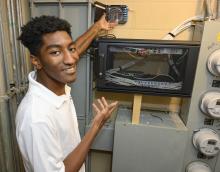
When Devin Weaver isn’t vibing at the Otto Bar or checking out the underground music scene at Metro Gallery, or even playing his bass guitar at home, the 28-year-old network engineer enjoys spending time amid the web of wires in storage closets inside low- and mixed-income apartment buildings dotting the city’s landscape.
It’s where his network design handiwork all comes together, snaking through the buildings to the routers installed in individual apartment dwellings, enabling residents to get gig speed Internet service.
That’s on par with what the regional monopoly provider Comcast offers city residents who can afford it. But in the buildings that Devin has made his technical playground, hundreds of financially-strapped households who subscribe to the fledgling community network he oversees get it for free – thanks to the philanthropy of dozens of organizations including the Internet Society Foundation, the France-Merrick Foundation, and the Digital Harbor Foundation.
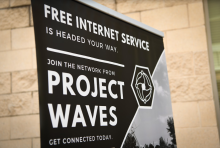
Born and raised in Baltimore, Devin works for Project Waves, a non-profit organization founded in 2018 by an old high school classmate of his, Adam Bouhmad, to bring broadband to mostly low-income households in Baltimore City.
A Small, Rising Wave of Connectivity
This week on the podcast, Christopher is joined by Greg Conte, Director of the Texas Broadband Development Office, and ILSR Outreach Team Lead DeAnne Cuellar. The state of Texas finds itself in a common position these days: last year it created a small office that, today, is suddenly faced with dispersing more than a billion dollars in new infrastructure funding through the Broadband Equity, Access, and Deployment (BEAD) program.
Greg talks about the challenges of staffing up and addressing the lack of data about where broadband is and isn't as a starting point for future work. He shares the process of developing a minimum viable product for mapping as well as the additional goal of integrating digital equity goals and socioeconomic data into a mapping effort.
Christopher, Greg, and DeAnne then dig into the implications of the new BEAD rules recently clarified by the NTIA, and how to square a mandate not to disciminate against community solutions with a Texas state law which places barriers in front of municipalities. He shares how HB5, passed by the Texas legislature last year, lets nonprofit and for-profit entities apply for funding, but privileges for-profit entities what applications are submitted for the same. The group talks about the balancing act of operating an unequal grant-making marketplace with a charge to efficiently and effectively address the digital divide with historic federal broadband funding.
This show is 31 minutes long and can be played on this page or via Apple Podcasts or the tool of your choice using this feed.
Transcript below.
We want your feedback and suggestions for the show-please e-mail us or leave a comment below.
Listen to other episodes here or view all episodes in our index. See other podcasts from the Institute for Local Self-Reliance here.
Thanks to Arne Huseby for the music. The song is Warm Duck Shuffle and is licensed under a Creative Commons Attribution (3.0) license.
This week on the show, Christopher is joined by Angela Thi Bennett, Director of Advocacy & Impact at DigitalC, a community-based Cleveland nonprofit which operates a fixed wireless network in the city's unserved and underserved neighborhoods. Before she leaves to become the first Digital Equity Director for National Telecommunications and Information Administration (NTIA), Angela sits down with Christopher to talk about everything the organization does to advance digital equity goals in the city, driven by an agenda that focuses on healthcare, education, and economic growth. She shares how the nonprofit developed a sustainable model to delivery reliable, fast Internet access for $18/month, how success comes from listening intentionally and regularly to what community members need and want, and what true empowerment means in the face of shifting agendas at the state and national level.
This show is 20 minutes long and can be played on this page or via Apple Podcasts or the tool of your choice using this feed.
Transcript below.
We want your feedback and suggestions for the show-please e-mail us or leave a comment below.
Listen to other episodes here or view all episodes in our index. See other podcasts from the Institute for Local Self-Reliance here.
Thanks to Arne Huseby for the music. The song is Warm Duck Shuffle and is licensed under a Creative Commons Attribution (3.0) license.
AARP has announced the latest round of its Community Challenge Grant Program, an effort to direct funding towards building more resilient, livable, equitable communities around the country. Applications for the current round are due March 22nd at 5pm ET.
Part of the AARP's Livable Communities initiative, this is the sixth iteration of the grant program, which led to the funding of more than $9 million in projects across 800 grants to nonprofits and local governments in rural, urban, and suburban areas. This includes everything from improved city infrastructure, to trainings, to new volunteer programs, to the support of local cultural and art initiatives.
Watch a video of the announcement below, or visit here to learn more.

A year after a group of local broadband champions got together to see how they could improve Internet access in Missoula, Montana, the Missoula Valley Internet Cooperative has successfully raised funds and designed, deployed, and launched a wireless mesh network delivering 150 Megabit per second (Mbps) symmetrical service to more than 50 of 550 pre-registered households for, on average, $40-60/month. The community-owned option has injected some welcome competition to a stagnant local broadband market, with a second network already in the planning stages in a community to the north.
Both efforts are being driven by the Pacific Northwest Rural Broadband Alliance (PNWRBA), a Missoula, Montana-based nonprofit aiming to build resiliency, local capacity, and expand quality Internet access to the region by making use of a variety of community-oriented business models. The nonprofit serves not only to coordinate grassroots organizing efforts, but provide technical assistance and lead policy engagement with local leaders. It is running a dual mission. First, to bring faster and more affordable Internet access via a community-owned model to the area. And second, to prove out a series of models in the region with the hopes of generating additional community-based approaches to improving broadband in the region and beyond.
Grant Creek
Nonprofit Alleghenies Broadband is leading a cohesive effort across a six-county region in south-central Pennsylvania to bring high-speed Internet access to areas that are unserved or underserved by reliable networks.
Part of its work is a recently completed Request for Proposals (RFP) in search of forming a series of public-private partnerships to help identify target areas and offer robust solutions to bring new infrastructure to the businesses and residents who need it most. As that process continues to unfold, however, the nonprofit is already working with city and county leaders to pursue a range of wireline and fixed wireless options that will result in better service and publicly owned infrastructure.
A Regional Approach
Formed in October 2020, Alleghenies Broadband is part of the Southern Alleghenies Planning & Development Commission. By coordinating efforts in six counties (Bedford, Blair, Cambria, Fulton, Huntingdon, and Somerset, collectively representing about 500,000 residents), it hopes to address the broadband gaps scattered across the region. Somerset, Fulton, and Huntingdon seem to be in the worst shape at present: while many residents have access to cable service, large swaths of the counties are stuck with DSL or satellite service only, leading to median download speeds of just 3.7-8 Megabits per second (Mbps) (see Fulton and Huntingdon coverage maps below, with satellite-only areas in grey). The remaining three counties also have significant gaps where no wireline access is available, representing thousands of households with poor or no service.
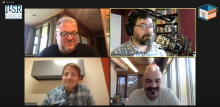
On Episode 15 of the Connect This! Show, co-hosts Christopher and Travis Carter (USI Fiber) are joined by two representatives from the Internet Service Provider Cruzio: James Hackett (Director of Business Operations & Development) and Chris Frost (Director of Technology and Infrastructure).
The topic of the day is Equal Access Santa Cruz, and how Cruzio is expanding its network with philanthropy to serve low-income households. They talk about the organizing and technical efforts that got it started, challenges along the way, and the success they've seen as a result of their collective hard work.
The secret sauce of equal access programs? There is none. Just put together a coalition of groups that can continue to do what they already do best, the result of which is bringing affordable, fast Internet access to more families. School districts can continue to serve kids, community foundations can continue to raise money and build relationships, and the ISP can continue to construct and operate Internet connections and infrastructure.
One particular success of the project: bringing in a point-to-multipoint gigabit connection to 140 homes, two laundry rooms, and an office in one farm worker community, funded by the local agricultural firm, to provide free service for three years.
Read more about the project here.
Subscribe to the show using this feed, or visit ConnectThisShow.com
Email us broadband@muninetworks.org with feedback and ideas for the show.
Watch here, or below.
Join us on Thursday, June 3rd at 5pm ET/4pm CT for a new episode of the Connect This! show, with co-hosts Christopher and Travis Carter (USI Fiber) joined by two representatives from the Internet Service Provider Cruzio: James Hackett (Director of Business Operations & Development) and Chris Frost (Director of Technology and Infrastructure).
The topic of the day is Equal Access Santa Cruz, and how a small ISP is expanding its network with philanthropy to serve low-income households. They'll talk about the organizing and technical efforts that got it started, challenges along the way, and the success they've seen as a result of their collective hard work.
The show will begin on Thursday, June 3 at 5pm ET/4pm CT.
Subscribe to the show using this feed, or visit ConnectThisShow.com
Email us broadband@muninetworks.org with feedback and ideas for the show.
Watch here, or below.
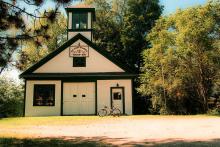
Born in Orono, Maine, the poet Frances Laughton Mace’s most notable verses were published in 1854 as a hymn entitled “Only Waiting.” Over a century and a half later, residents in her native town – and in the neighboring community of Old Town just four miles up the road – might be inclined to hum a line or two. Not because they are getting religion, but because of the wait in getting Fiber-to-the-Home (FTTH) Internet connectivity.
After a decade of hopeful planning, disappointing setbacks, design work, and putting out multiple RFPs to move the project forward, the nonprofit OTO Fiber Corporation is on the verge of lighting up a six-mile fiber network this summer. With three miles of fiber deployed in Orono, a town of 11,000 residents and home to the University of Maine’s flagship campus, and the other half covering a portion of Old Town, the budding network will provide FTTH service to a limited number of residences and businesses in both towns. It’s a pilot project that, if successful, will serve as a core network which can eventually be extended to cover the entirety of both communities.
“It’s taken us forever to get to this point it seems. We started this process ten years ago and we are still slogging our way through while we’ve seen other communities zip ahead,” Belle Ryder, Orono Assistant Town Manager and President of OTO Fiber, told us this week. “It is really, really, really hard for communities relying on volunteers to pull off the feat of building and operating these networks.”
Ryder wasn’t complaining or exasperated. She was just being candid about the process she and her colleagues at OTO Fiber are committed to see through to the finish. The slog she is referring to goes back a decade when Orono was in the process of putting together a comprehensive development plan.
Families and Fiber, Fits and Starts
With just about half of the town’s population made up of college students living in off-campus apartments and the other half made up of residents 60 and older, “we really needed to draw families back,” Ryder explained.
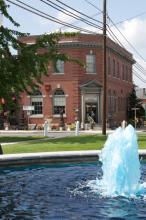
In the heart of Adams County, Pennsylvania, not far from the site of the pivotal Battle of Gettysburg and where President Abraham Lincoln later delivered his famous 1863 Gettysburg address declaring “a new birth of freedom,” plans are being drawn up in the battle for better broadband.
In the borough of New Oxford, ten miles east of the county seat (Gettysburg), the non-profit media group Community Media of South Central Pennsylvania is leading the charge to bring Fiber-to-the-Home (FTTH) victory for the approximately 102,000 residents spread out across the rural county’s 520 square miles.
But with restrictive state laws that protect incumbent providers from competition by not allowing municipalities to provide broadband service, and scarce funding for non-governmental entities to build broadband infrastructure, victory is far from certain.
Small Steps, Big Broadband Problem
The goal right now, Community Media’s Director of Operations Mark Wherley told us this week, is to secure $3 million to bring fiber access to 1,200 homes in New Oxford and Abbottstown, two of the 34 municipalities that make up Adams County, encircling Gettysburg.
Image
Working in conjunction with the Adams County Economic Alliance, Community Media is looking to tap the state’s Redevelopment Assistance Capital Program (RACP) for funds to start building the network. Through RACP, Community Media would be eligible to receive between $1 million and $5 million, provided they are able to raise a 50 percent matching contribution.