Upcoming Broadband Communities Mag Issue Dedicated to Community Networks

We look forward to the next issue of Broadband Communities magazine, due on June 15th. This upcoming edition is titled "Fiber Nation: Are We At The Tipping Point?" and focuses completely on local communities that created their own networks.

Broadband Communities puts on the annual Broadband Communities Summit, which we just attended in Dallas in April. The magazine is free and features a lot of information useful to those thinking about building networks.

According to the announcement, you can subscribe now and have the issue delivered to your door and/or your inbox. The issue will include:

  • Annual Census and Analysis of Muni Networks
  • FTTH Deployments with Case Studies
  • Best Practices for Broadband Adoption
  • Deployment of Advanced Broadband on University Campus
  • Financial Modeling for Rural FTTH Builds
  • Economic Development and Broadband
  • Gigabit Communities - The Fast Few

Joanne Hovis on Business Plans for Municipal Fiber

Joanne Hovis, President of CTC Technology and Energy, recently published a must-read article in Broadband Properties Magazine. Whether you are a community leader investigating the possibility of a publicly owned network or an engaged citizen looking for pros and cons, this piece explains practical benefits succinctly. In her article, The Business Case For Government Fiber Networks [PDF], Hovis looks at life beyond stimulus funding. She points out how we should evaluate municipal networks in an environment where shareholder profit is not the first consideration.

Hovis gives a brief history of how local communities reached this point of need. As many of our readers know, local communities used to be able to negotiate with cable providers for franchise opportunities and rights-of-way. Often cable providers would construct broadband infrastructure in exchange for a franchise to operate in a given community, creating I-Nets for local government, schools and libraries. Once states inserted themselves into the process with state-wide franchising, local negotiating power evaporated. Many of those franchise agreements are ending and local leaders are considering municipal fiber optic networks.

Hovis stresses that municipalities do not function in the same environment as the private sector. While they still have a fiscal responsibility to their shareholders (the taxpayers) the main function is providing public safety, encouraging economic development, offering education, and using tax dollars to better the quality of life. Hovis describes how redefining return on investment (ROI) needs to go beyond the balance sheet bottom line. 

These benefits have nothing to do 
with traditional financial measures. Rather, they represent the return 
to the community in terms of such largely intangible societal benefits 
as enhancing health care quality, narrowing the digital divide, providing enhanced educational opportunities to school children, delivering job search and placement opportunities at public computer centers and helping isolated senior citizens make virtual social connections.

joanne-hovis.jpg

Even without the intangible benefits, Hovis argues the financial benefits to local communities cannot be ignored:

First, a government network can help avoid existing and future costs by replacing services for which the government previously paid third parties. Second, a network can bring revenues to a community, especially given new E-Rate regulations that make government networks eligible for subsidy if they serve schools and libraries. Together, these cost savings and revenue streams can add up to significant dollars – potentially to amounts that justify financing the necessary construction.

Hovis explains the economics of government need to lease circuits, an extremely lucrative practice for phone companies or providers. In addition to being expensive, Hovis notes they are often low-bandwidth. Hovis takes it one step further:

Build the network and you will shave this amount from your accounts payable.

In fact, because a government network can deliver far higher-capacity connectivity than the jurisdiction
 had previously leased, its value is even greater than simple cost avoidance. 
A government that owns a network 
can use inexpensive, off-the-shelf equipment to connect its facilities to one another at no cost for bandwidth (because the traffic is “on network”
 and not going out to the Internet). It can also deliver Internet connections to these facilities at a per-unit cost much lower than that of leased connections because it can aggregate the needs of all departments and purchase commodity bandwidth. This is particularly true for a jurisdiction that can develop a mutually beneficial partnership with a provider of wholesale bandwidth.

Considering the fact that capacity needs continue to grow, savings with a publicly owned next-generation network increase exponentially. Eliminating the need to lease now eliminates the need to lease more later.

Hovis also examines in detail the different ways municipal networks can provide revenue. She examines:

  • Dark or lit fiber to community anchor institutes (CAIs): We have documented hundreds of communities that lease dark fiber to CAIs and also to commercial customers. That list continues to grow.
  • Middle Mile Capacity: Providing infrastructure to private ISPs is more speculative, but encourages economic growth and provides connectivity to businesses and individuals who would not otherwise have it.
  • E-Rate Subsidies: As of September 2010, nonprofit and public networks are eligible for E-rate subsidies for providing broadband to schools and libraries. This potential source can contribute toward network self-sustainability.

The article also stresses one of the factors we find most compelling when considering investment in publicly owned networks - keeping local money in the local economy:

Circuits leased from a large national provider require the delivery of a big monthly check to a potentially far- away corporate entity, but monthly fees paid to a government-owned network stay in the community to be spent on other government services and to be multiplied when network employees go out to eat or spend money at other local businesses.

The concept of planning, financing, and building a municipal network is daunting to many communities; it should be a unique local decision. Few people have experience like Hovis, who does an excellent job of laying out critical considerations.

First BTOP Project Connects Rural North Georgia Communities

Back in December, 2009, Vice President Biden travelled to Dawsonville, Georgia, to officially kick off the American Recovery and Reinvestment Act (ARRA) program. The first award, a grant of $33.5 million, went to the North Georgia Network Cooperative. The group combined that grant with local and state funding and in May, 2012, lit the North Georgia Network (NGN).

We spoke with Paul Belk, CEO of NGN, who shared the network's story and described how it is improving economic development while serving schools and government across the region. We also recently published a podcast interview with Paul Belk.

In 2007, Bruce Abraham was the Lumpkin County Development Authority President and could not recruit new business to the region. Atlanta is only 60 miles away but companies and entrepeneurs were not willing to branch out toward north Georgia. Business leaders repeatedly told Abraham they were not interested because of the lack of broadband. DSL was available from Windstream, but businesses kept telling Abraham, "That's not broadband." North Georgia was losing jobs and there was no strategy to replace them.

Abraham found economic development representatives from Forsyth, White, Union, and Dawson counties shared the same problem. With North Georgia College & State University in Dahlonega, the group decided to address the problem together.

In 2008, they received a OneGeorgia Authority BRIDGE grant. They used the $100,000 award to commission a feasibility study that suggested the area had potential as a new tech hub. The study also indicated that the region's traditional manufacturing and agricultural industries would continue to dwindle. The group, determined to pursue the establishment of a new tech economy, knew the first step would be next-generation infrastructure.

In 2009, two local electric cooperatives joined the group and it incorporated to become the nonprofit North Georgia Network Cooperative. With the addition of the Habersham and Blue Ridge Mountain Electric Coops, the organization had access to technical expertise, equipment, and staff that could facilitate construction and operation of the future network.

Recovery Seal

Belk notes that the pieces fell into place for NGN throughout the process. The group applied for a grant during the first round of the Broadband Technology Opportunities Program (BTOP). The NGN Cooperative received a $33.5 million BTOP grant and an additional $2.5 million OneGeorgia Authority BRIDGE grant. Habersham and Blue Ridge Mountain also invested, bringing the final cost to $42 million.

Mostly aerial, the 1,100 mile network went up quickly (PDF of the network map). Construction began in March 2011 and was finished that same fall. On May 2, 2012, the network was officially lit in Lumpkin County where construction had started, completing the ring.

Unlike most other BTOP projects, NGN provides some last mile connectivity for small and medium sized business. Habersham and Blue Ridge Mountain work directly with customers, who can purchase connections between 1-10 gig. The backbone allows 100 gig transport.

Belk notes that NGN changed economic development in several ways. Before the network, local businesses learned to get by with little or no reliance on local connectivity. Tax professionals used to store files and transactions on a laptop and then drive to another community with better connectivity because DSL was not reliable or fast enough to transfer files. He describes their method as a "courier service." The NGN Cooperative continues to reach out to small and medium sized businesses to encourage adoption and show them how the network can expand their reach.

Belk told us about JumpinGoat Coffee Roasters. In the past, this small business relied exclusively on sales through its physical storefront and most sales were during the tourist season. Now the company sells gourmet coffee all over the country all year long beause it has reliable and robust connectivity. JumpinGoat is only one example of how NGN brings more money into the community.

Recently, NGN announced it will provide connectivity to a new data center built by Boston-based Standard Colo, in Lumpkin County. The initial investment in the community will be $10 million and community leaders expect the total investment to be $70-83 million in five years. 

Georgia seal

The investment will create 10-12 high paying positions in a community where average wage is $10 per hour. In addition to increasing the tax base, Belk sees this as a first step in transforming the area into the tech hub envisioned in 2008.

NGN also contributes to the community's efforts to prepare students to fill future tech jobs. Before NGN, Lumpkin County Schools had 3 bonded DSL connections and less than 20 Mbps to the Internet - now the District has 1 gig and access to the 10 gig cloud at no extra charge. Eight school districts and three colleges connect with NGN. The cloud allows schools to scale back on expenses for equipment, such as servers and video encoders, because each district can share across the cloud rather than purchase equipment for each location.

Eventually, the schools hope to eliminate textbooks and use the cloud as depositories for learning materials. Belk sees the schools breaking out of the "island" approach to pool their buying power for better prices on virtual learning material licenses.

Kids are entering college better prepared, says Belk, in part because the University of North Georgia and other local colleges provide credit to high school students via distane learning. The community wants to create an environment where, throughout their school careers, kids learn with technology and acquire skils to take advantage of the booming tech hub. Parents in north Georgia want to keep their kids close to home.

In addition to schools and businesses, seven local governments and five major medical centers use the network for connectivity. Belk notes that most financial institutions in the region also connect to the NGN. Users work directly through the electric coops to connect.

NGN's serves as a backbone for multiple carriers, reducing rates, encouraging choice, and prompting better service in a region that was left behind by large incumbents. The price of DSL has dropped $10 since the network launched. Belk says Windstream, who would not invest in the region in 2007, is "building fiber like crazy."

Belk feels his region is in a good position now, thanks to the network. While he can point to value in enhanced educational opportunities, healthcare advances, and business development, he believes the community gained most by avoiding loss. Belk notes that, like the interstate highway build out that determined what small towns would survive, broadband infrastructure establishes winners and losers. If you don't offer it, some other community will.

Ketchum, Idaho: No Tolerance for Cox Push Polls

Cox pushed Ketchum one step too far. The community of 2,700 formed a broadband advisory committee in November, 2012, and included a representative from Cox on the committee. Brennan Rego of the Idaho Mountain Express recently reported on happenings in Ketchum.

When residents in Wood River Valley started receiving push poll telephone calls from Cox to poison any possibility of a community owned network, Mayor Randy Hall and city leaders reacted promptly. They booted Cox off the broadband advisory committee.

Consistent with Cox push polls in other places, questions were leading:

 “The questions were so outrageous, I didn’t want to continue with the survey,” [Valley resident Sarah Michael] said. “I got offended. They were inappropriate and misleading.”
 

Michael said that, in essence, one question asked: Would you support Ketchum’s broadband initiative if you knew the city would cut police, fire and other essential services to pay for it?
    

“Who’s going to answer yes to that?” she said.

Michael and other residents who received the calls contacted surprised city staff and Mayor Hall. 

 “As the mayor, I can’t stand by and let somebody imply that I’m going to compromise the Police Department and the Fire Department by taking money away from them and putting it toward a broadband initiative,” Hall said. “That’s insane. I would never do that. I think the survey was trying to create fear.”

Cox claimed the questions were designed to "learn more about the public's opinion" but would not divulge the wording of the survey questions.

The city posted a disclaimer on its website to ensure residents knew the survey was not associated with the committee. 

“Cox is a very valuable member of our community,” Hall said. “But to imply that the city is willing to compromise the health and safety of its citizens by funding a broadband initiative is false and irresponsible.”
    

Hall said he considers Cox’s “unilateral action” in deciding to conduct the survey a “breach of trust,” but that the city would welcome a new representative of the company to the committee.

This behavior from Cox should be unacceptable in any community. Unfortunately, such polls are a common tactic from Cox, which we wrote about in our case study of Lafayette. In that situation, someone recorded the poll phone call, a very smart move that allowed everyone to hear how Cox had worded the questions to turn the community against the project with lies.

North Georgia Network Brings Gig to Schools, Jobs to Region - Community Broadband Bits Episode #46

The North Georgia Network was the first recipient of a BTOP (Broadband Technology Opportunities Program) stimulus grant in the nation and has been an interesting success story. For the latest episode of our Community Broadband Bits podcast, President and CEO Paul Belk of the NGN joins us to discuss the history, present, and future of the project.

The North Georiga Network is comprised of two rural electric cooperatives and local economic development organizations affiliated with eight counties. NGN is focused on bringing high capacity connections to community anchor institutions and businesses.

Paul discusses how the project began, long before the stimulus programs were envisioned. As fits with our experience, the first motivation was attracting jobs. Stuck with slow DSL connections, the region was having trouble attracting any investment. Now they have a fresh start and can deliver ultra high speed connections to schools affordably as well as businesses.

We want your feedback and suggestions for the show - please e-mail us or leave a comment below. Also, feel free to suggest other guests, topics, or questions you want us to address.

This show is 20 minutes long and can be played below on this page or subscribe via iTunes or via the tool of your choice using this feed. Search for us in iTunes and leave a positive comment!

Listen to previous episodes here. You can can download this Mp3 file directly from here.

Thanks to Mount Carmel for the music, licensed using Creative Commons.

Businesses Lining Up for Service in Longmont, FTTH Build-Out Studied

In January, Longmont Power and Communications (LPC) announced they would begin connecting businesses located within 500 feet of the existing network. As we reported, local businesses were chomping at the bit to get hooked up and enjoy the high-speed next generation network. Even without efforts at marketing or advertising, more businesses have added themselves to the queue. LPC will present the formal business plan for expanding the network to the City Council on May 14th. Tony Kindelspire recently reported on the race to get on LPC's network in the Longmont Times-Call:

"We are bringing to council a business plan to build out all of Longmont," [Vince] Jordan, [Broadband Services Manager], said. "It's the whole enchilada."

The fact that there has so far been only limited rollout is due to economics. Currently, the installations are being paid for from a reserve fund that Longmont Power has built up over the years leasing portions of its fiber-optic loop to entities such as Longmont United Hospital and a third-party provider that services the school district. Those leases bring in about $250,000 annually, Jordan said.

For 2013, the Longmont City Council authorized LPC to use $375,000 of that reserve fund to begin connecting businesses and residents to the loop.

This model works, but does not connect everyone fast enough for their liking:

To expedite the build-out, extra up-front dollars will have to be allocated, but where those dollars will come from is yet to be determined, Jordan said, adding that ultimately, the decision will lie with City Council.

Map of Longmont Fiber Rings

Right now, Longmont will cover the initial cost of connecting subscribers except in cases of extraordinarily high cost cases. If it would cost $10,000 to install but the payback to the utility in 2.5 years is only $6,000, a customer would have to cover the $4,000 difference presently. While there are over 1,300 businesses with in 500 feet of the network, connection costs vary depending on proximity to roads, structures, and geography.

Jordan notes LPC's first priority is to boost economic development:

"We're really focused on economic development, so the ones that will put the most dollars (they save on broadband costs) back into their business, those are the ones we're working with first."

Businesses and organizations that are on the network appreciate fast symmetrical service, affordability, and the fact that they get service from the city rather than a commercial provider:

"I emailed Vince asking when I could get on," said Michael Jurey, network/telecommunication specialist for Longmont Clinic. "Luckily, the loop ran right by Longmont Clinic. On our side of the street no less."

Jurey said the city's network is three times faster than the speeds the clinic got before at a cost savings of $1,600 a month.

"We use it for two reasons," said one of the other three owners [of the Pumphouse, a restaurant and brewpub in Longmont], Dave D'Epagnier. "No. 1 is our business functions -- we process credit cards with it ... just normal day-to-day business activities. Plus, it's a big place, and we could have 50 customers that are using the broadband all at once."

The other thing that attracted him and the other owners was that the business was finally able to tap into the city-owned network after so many years of having to buy high-speed service from a commercial provider. And that is all thanks to the voters, D'Epagnier said.

According to a Scott Rochat article in the Times-Call, the business plan for a FTTH network to anyone in town is possible within three years with a $41 million investment. That plan eliminates the usual $500 - $15,000 hook-up fee:

 "We have to be competitive," said Tom Roiniotis, director of LPC. "None of the incumbents charge an install fee, so we won't as well."

Uptown Services prepared the business plan and included residential fees from $39.95 for 10 Mbps to $99.95 for 100 Mbps for Internet. Residential Internet would be symmetrical. Business rates would range from $49.95 for 20 Mbps/5 Mbps to $499.95 for 250 Mbps symmetrical.

100 Years of Longmont Power

If LPC wants to pursue a triple play offering, Uptown estimates it would cost another $6 million. At this point, LPC does not consider triple play a good investment:

"The young generation that's active now, they don't watch TV in the conventional way," Jordan said. At a recent presentation, he said, when he asked a college student how often he watched traditional scheduled TV programming, the response was "Never."

According to a survey conducted for the business plan, about 68 percent of respondents said they would either definitely or probably switch to the city for Internet service if it were cheaper than existing services. Only about 20 percent said they had a "triple play" or wanted it.

Uptown's estimates were based on a take rate of 35% and the business plan estimates a broadband utility to be in the black within four years and to pay for itself in ten years.

Possible funding mechanisms include:

  • Certificates of participation, using city property as collateral
  • A bond issue backed by sales tax
  • A bond issue backed by electrical revenue 
If the city council considers the plan favorable, it will go to the city finance department for more detailed review.

Here is a quick video from LPC, as technicians install connections at the Pumphouse:

Susan Crawford Profiled in the New Republic

In a New Republic article, John B. Judis compared Susan Crawford's focus on expanding access to fast, affordable, and reliable Internet networks with Senator Elizabeth Warren and her pursuit of Wall Street financial reform.

Judis discusses Crawford's book, Captive Audience: The Telecom Industry and Monopoly Power in the New Gilded Age, and the grassroots effort to convince President Obama she should be the next FCC chair:

“My name comes up in discussions about the new FCC chair. I’m on lists,” Crawford has said—but she expects the job to go to telecom entrepreneur and Obama bundler Tom Wheeler. “It’s obvious to me that they can’t [appoint me],” she told me. “The incumbents would go bananas.”

The article shares a little about Crawford's personal background and how she came to follow the mantra, "Life is short, get in the way." One part that resonated with us is this paragraph:

In 2009, Obama appointed Crawford the White House special assistant for science, technology, and innovation. It upsets her to talk about her time in government. “Every time I remember this White House stuff, it has a real effect on me,” she says. “You think that policy is going to be made on what the American people need, but what I was surprised by was how much of this was about reelection from the very beginning.” When she was asked to figure out how to spend stimulus money for broadband access, she had to resist suggestions to extend “crappy wireless through the country because that would look good in the reelection,” she says. “The idea that there was something different about Internet access as a market, that its quality would be available at a reasonable cost, that did not resonate in the White House.” She resigned after barely eight months.

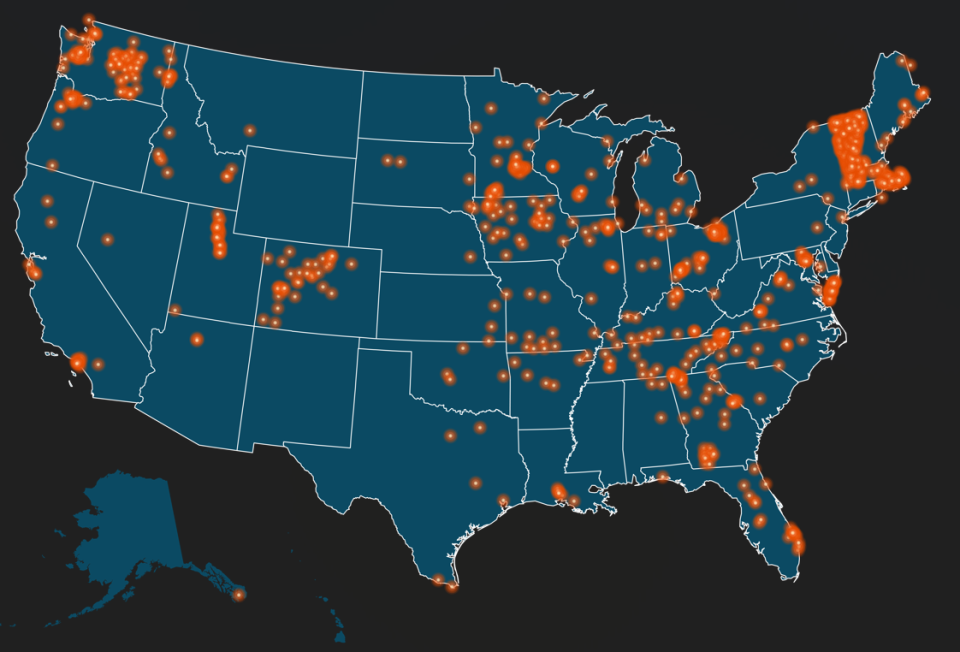
Judis links to our Community Network Map, a tool Crawford cites on a regular basis. We hope to see more mainstream articles on Crawford and the muni movement as more people realize how local self-reliance can help cure our connectivity challenges.

AT&T and ALEC Take Aim at Connecticut for Third Year in a Row

StopTheCap! reports there are three bills in the Connecticut General Assembly that, if passed, will leave little or no protections for customers of plain old telephone service who encounter difficulties with service. AT&T and ALEC back these bills for the third year in a row.

Such bills are not new to our readers who often see our reports on large corporate providers that use state legislators as vehicles to shed regulations. Phil Dampier from StopThe Cap! summarizes all three bills:

HB 6401: House Bill 6401 strips the Public Utilities Review Authority (PURA) of their ability to regulate Voice Over Internet Protocol (VoIP) telephone services. An emerging market, this bill creates deregulation for the sake of deregulation.

HB 6402: House Bill 6402 eliminates the right of regulators to oversee AT&T to make sure it has some form of accountability to the public. The section on annual audits has been gutted, making it impossible to protect the public from rate-fixing. More importantly, it includes a provision to allow AT&T to end service to any customer it wants upon 30 days’ written notice. [PDF of the Nonpartisan Bill Summary available from the Connecticut General Assembly]

SB 888: Senate Bill 888 has an ALEC-drafted provision that allows cell phone towers to be built on public lands on a presumption that the will of telecommunications companies is in the interest of the public good.

As we saw in Kentucky, concerned citizen groups will not take the change lying down, joining forces to form the Don't Hang Up on Connecticut coalition. AARP Connecticut leads the charge to motivate seniors and their families, a group traditionally dependent on landlines. George Gombossy, from the New Britain Herald, spoke with John Erlingheauser, AARP's advocacy director:

Erlingheuser said his organization is particularly concerned with three elements of the proposal: Allowing AT&T to stop providing any of its services with a 60-day notice to the Public Utilities Regulatory Authority.

Limiting the state’s quality of services standards “which cover such things as responding to trouble reports and service outages.” And a halt to annual audit of AT&T’s business in Connecticut in which the company reports on its investments in infrastructure and modernization.

The three, he said, will result in AT&T spending less on traditional phone system and more on its cellular and Internet-based systems.

Connecticut Seal

The list of supporting legislators and AT&T lobbyists includes ALEC chairs on both the federal and state level.

The New Haven Register also reported on the measure:

“If AT&T is allowed to drop service in unprofitable areas at their sole discretion, if they’re allowed to let service outages drag on for weeks with no consequences, if they’re allowed to jack up rates — of course they will,” Daniel Ravizza of Connecticut Citizen Action Group said in a statement. “‘Trust me’ is not a good enough guarantee for Connecticut consumers.

We interviewed Harold Feld twice for the Broadband Bits podcast and he talked about the transition to new voice technology and his expectations from AT&T. Feld described AT&T's business practices and history of investment, or lack thereof - that history that supports Ravizza's concern.

We will be following this story and hope to soon report on the coalition's success. For more on how Kentucky citizens stopped similar legislation, you can listen to Christopher interview Mimi Pickering and Tom FitzGerald in episode #44 of the Broadband Bits Podcast.  

Susan Crawford to Speak in San Francisco May 14th

On May 14th, Susan Crawford will speak at the California Public Utilities Commission (CPUC) in San Francisco. The event will be hosted by the Division of Ratepayer Advocates (DRA) of the CPUC, and the theme of the discussion will be "Digital Communications in the United States: Should Broadband Communications be a Public Utility Service?”

The event runs from 2 p.m. - 3:30 p.m. PDT. The CPUC auditorium is located at 505 Van Ness Ave. in S.F. For those of us who can't make it in person, the event will be webcast and archived.

From the invite:

Professor Crawford will speak on the current status of broadband communications including the state of competition, affordability, availability of high speed internet, and whether cities should be allowed to build their own municipal fiber broadband networks.  Attendees are encouraged to participate in the dialogue. 

Questions for the Forum may be posted on Twitter using #DRAForum. We look forward to seeing all your great questions and may even ask some of our own.

New York Times on Internet in America, Genachowski Legacy

Eduardo Porter has an important column today in the business section of the New York Times, "Yanking Broadband From the Slow Lane." He correctly identifies some of the culprits slowing the investment in Internet networks in our communities.

The last two paragraphs read:

Yet the challenge remains: monopolies have a high instinct for self-preservation. And more than half a dozen states have passed legislation limiting municipalities from building public broadband networks in competition with private businesses. South Carolina passed its version last year. A similar bill narrowly failed in Georgia.

Supporting these bills, of course, are the nation’s cable and telephone companies.

Not really "supporting" so much as creating. They create the bills and move them with millions of dollars spent on lobbyists and campaign finance contributions, usually without any real public debate on the matter.

Eduardo focuses on Google Fiber rather than the hundreds of towns that have built networks - as have most of the elite media outlets. Google deserves praise for taking on powerful cable and DSL companies, but it is lazy journalism broadly that has ignored the networks built by hundreds of towns - my criticism of the press generally, not Eduardo specifically.

FCC Logo

The person who deserves plenty of criticism is former FCC Chairman Genachowski. From the article:

According to the F.C.C.’s latest calculation, under one-third of American homes are in areas where at least two wireline companies offer broadband speeds of 10 Mbps or higher.

We have 20 million Americans with no access to broadband. The rest are lucky to have a choice between two providers and even then, most still only have access to fast connections from a single provider.

When the National Broadband Plan was unveiled, we were critical of it and believed it would do little to improve our standing. Even its architect, Blair Levin, is annoyed at how Genachowski failed to implement even the modest proposals put forth.

Back in the NYT piece, we find this:

Mr. Genachowski contends that broadband deployment is on the right track. He points to the growing number of high-speed broadband deployments like Google Fiber and municipal projects around the country, as well as to AT&T’s announcement that it will expand the footprint of its U-verse network — the number of homes to which service is available — to 33 million. This uses fiber part of the way and, AT&T claims, can attain up to 75 Mbps.

Absurd. First of all, the supposed AT&T expansion is playing with numbers. If anyone actually gets U-Verse from this new deployment, it will be fewer than 1.5 million people but we really have no way of knowing because neither the states or the FCC really keeps track of these deployments. They just take AT&T's word for it.

As for 75 Mbps, talk about cherry picking data. Most people live far enough away from the DSLAM or have old enough copper wires that they will not even come close to that number. And this is only for downstream - the upstream capacity remains a fraction of that. This is a fantasy in a fantasy but these numbers are repeated by media sources because they come from AT&T.

I'm rather surprised Genachowski did not also take credit for AT&T's pretend fiber press release in Austin or the overblown CenturyLink pilot in Omaha. Communities engaged in the hard work of building a network received scant attention until they had a ribbon cutting where Chairman Genachowski would appear suddenly supportive and trying to take some measure of credit.

FCC Revolving Door

Genachowski likely felt more comfortable with AT&T, CenturyLink, and a few other big corporations because they share his preference for press releases rather than doing the hard work that needs to be done. We look forward to seeing which of these firms he joins as a lobbyist of some sort ... after a stint at a nonprofit to make it less obvious, of course. Wouldn't want to be as obvious as former FCC Commissioner Baker.

Lest I go too far in attacking our former FCC Chairman, we do remain thankful that once in awhile he did stand up the big corporations and meekly request a reasonable concession.. Most recently, he spoke out against legislation in Georgia to revoke local authority to build networks. For years, FCC Commission and acting Chair Mignon Clyburn has fought to preserve local authority and we were pleased to see her get some backup from the then-Chairman. He didn't actually use his power to actually do anything, but it was nice of him to think of us.

As we move forward with the new FCC under Chairman-nomineer Wheeler, we hope to see real progress on expanding fast, affordable, and reliable Internet access to everyone. Given his industry background, we cannot help but be nervous. And the utter disaster Obama has been for a public interest media and telecom agenda does not help either.

As this NYT article confirms, communities are smart to pursue their own strategies in solving this problem, not waiting for DC to sort anything out. And if DC can be bothered to take any action on telecom, it would be smart to start by removing barriers for communities that want to invest in themselves.